Artificial intelligence has been dazzling us on screens for a while now: it writes text, generates images, and writes code. But what happens when it has to pick up a box, close it with tape, and stick a label on it? That’s where a different, much harder challenge begins: acting in the physical world. That is the territory of Genesis AI, a U.S. company that has just announced a US$500 million Series A round.
A Huge Bet on Physical Artificial Intelligence
According to TechCrunch, the round is led by Khosla Ventures, Premji Invest, and Eclipse, and follows a US$105 million seed round in 2025. These are investment figures, not commercial revenue. They reflect investor interest in so-called physical artificial intelligence, meaning systems capable of doing work through a machine’s body, but on their own they don’t prove that the technology is commercially viable.
Chief executive and co-founder Zhou Xian maintains that the company has solved the problem of dexterous manipulation (dexterous manipulation). That statement should be read for what it is: a claim by the company. The information available does not yet allow us to confirm that the problem has been solved in a general way.
Why Something So Simple Is So Hard for a Robot
For a person, picking up a box, arranging it, or peeling off a label is almost automatic. For a machine, it requires several capabilities at once:
- Spatial perception: understanding where each object is and how it is oriented.
- Coordination: moving arms and hands in sync.
- Force control: gripping without crushing or dropping.
- Adaptation: reacting when something turns out differently than expected.
That is why manipulation is considered one of the great challenges of advanced robotics. Language models have progressed spectacularly, but robots still stumble over tasks that a factory worker handles without thinking.
A Demonstration That Teaches a Lot, for Better and for Worse
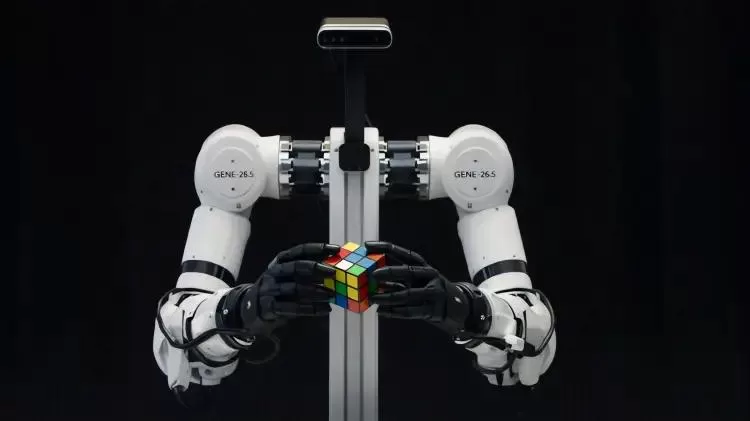
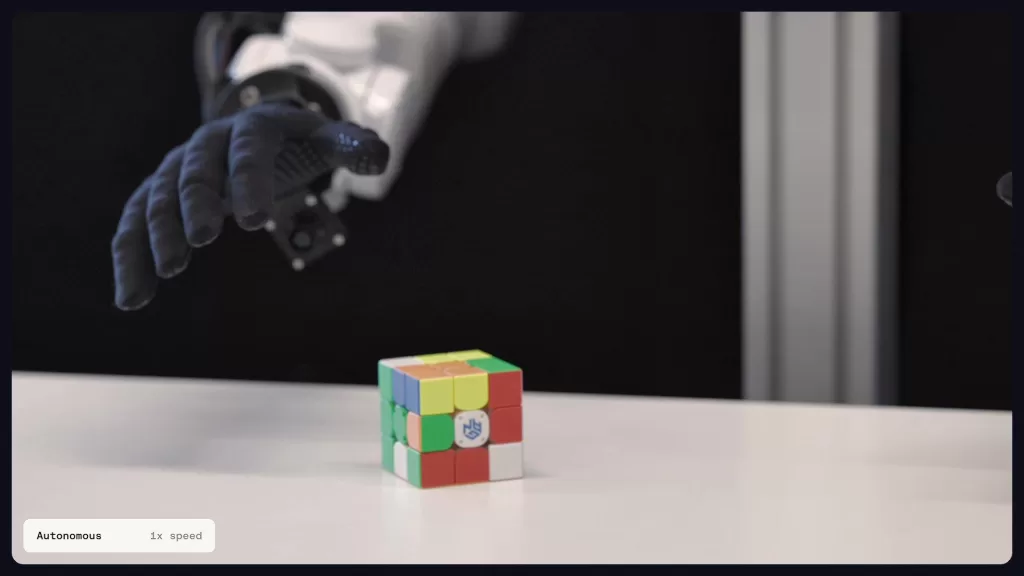
During a TechCrunch visit to Genesis AI’s facilities in Silicon Valley, two commercial robotic arms carried out a complete sequence: they picked up small boxes, scanned them, placed them inside another box, closed it, sealed it, and applied a label.
The coordination was impressive. However, on a second run the system dropped a box and had trouble peeling off an adhesive label. That contrast is the key to the whole story: a successful demonstration is not the same as reliable automation in real-world conditions.
How Genesis AI Is Trying to Teach Robots
Learning from Human Force
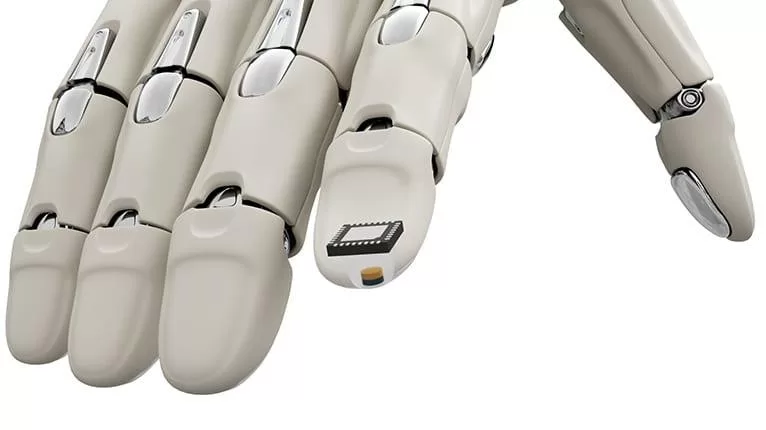
One of the most interesting elements is the collection of force data. According to the report, the company uses gloves with sensors and cameras mounted on devices worn by human workers; more than a hundred people contribute data on physical activities. The idea is not just for the robot to recognize objects, but to learn how to touch, hold, and handle them.
Millions of Simulated Experiences
Genesis also invests in high-fidelity physics simulations to reproduce interactions between robots and objects. The aim is to complement real-world data and rely less on purely physical training. There is, however, a well-known difficulty in robotics: what is learned in simulation does not always transfer perfectly to reality.
Eno, the Humanoid That Still Has to Prove What It Can Do
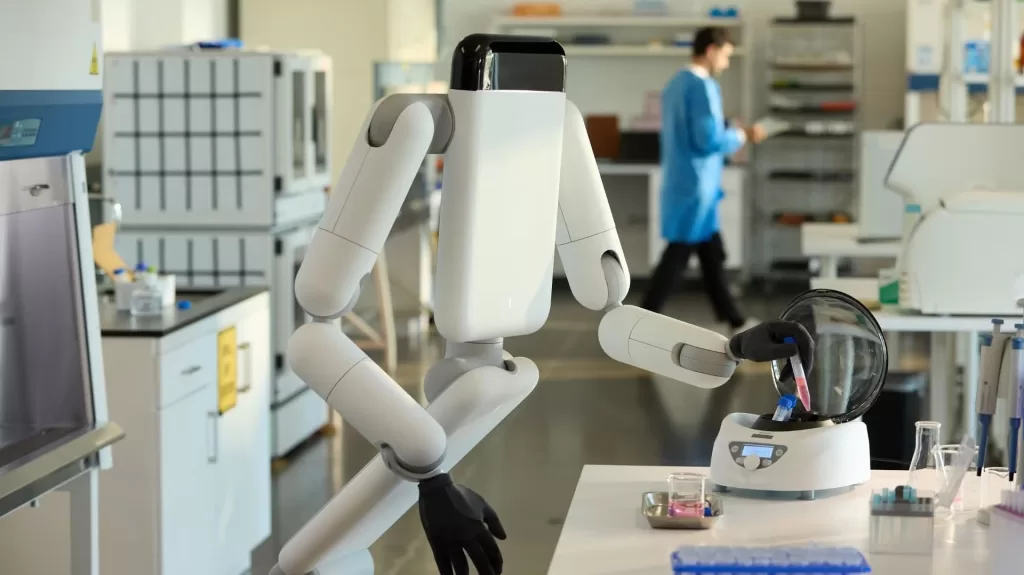
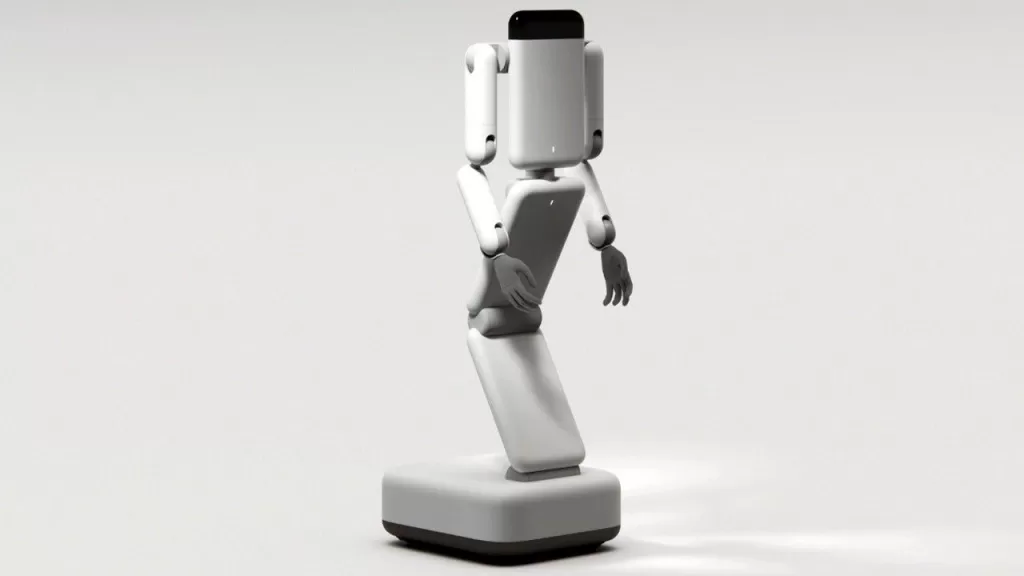
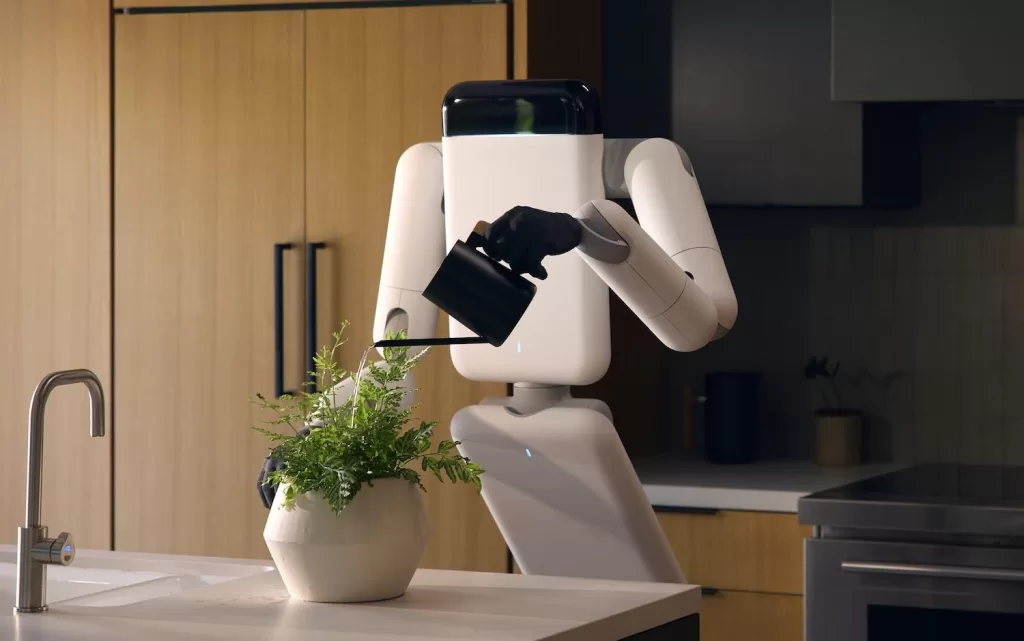
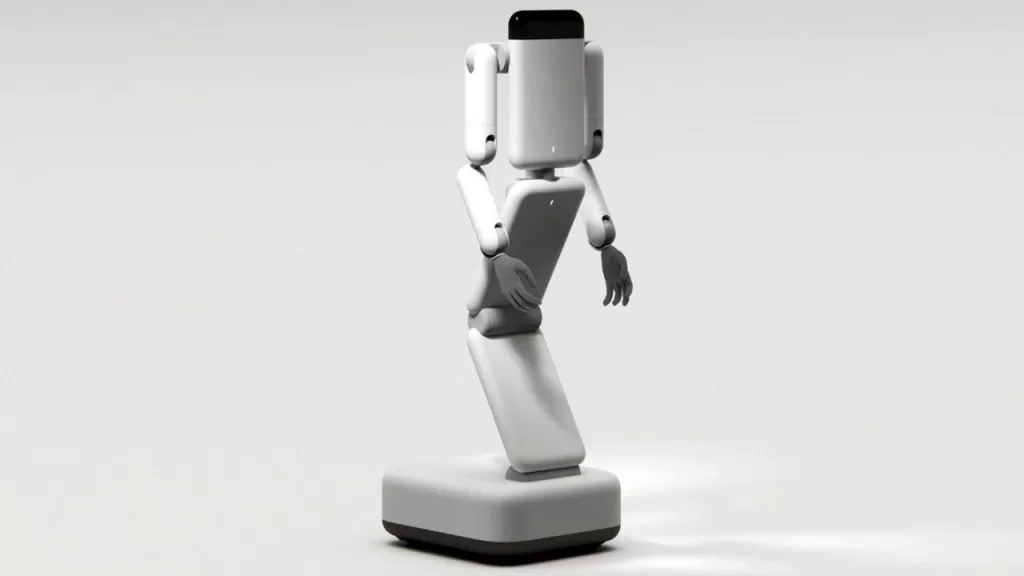
Eno is the company’s flagship robot, with a minimalist design that tries to set it apart from other humanoids. According to the information provided, between 30 and 40 units had been built, and pilot tests were under way with a small group of unidentified customers.
One important detail: Eno was not available to show its capabilities during the TechCrunch visit. Tests with commercial robotic arms do not allow us to automatically assume that the complete humanoid robot would perform equally well.
The Obstacle May Not Be the AI, but the Hardware
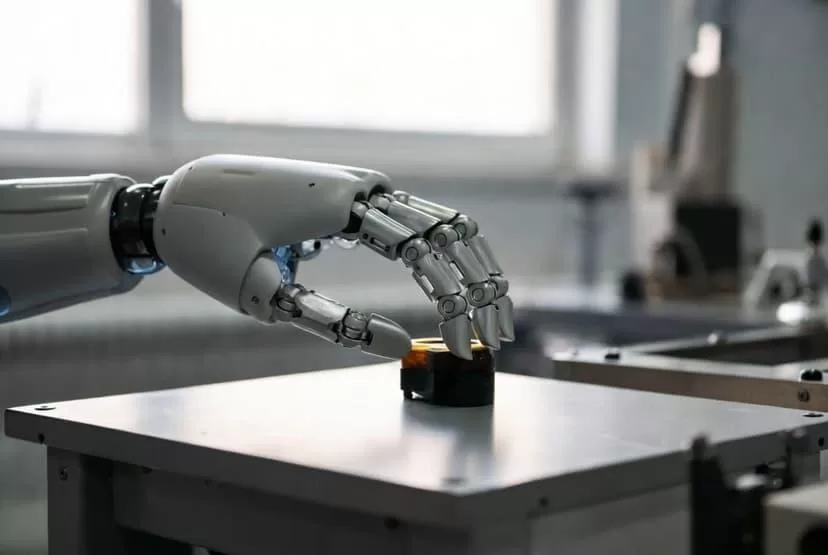
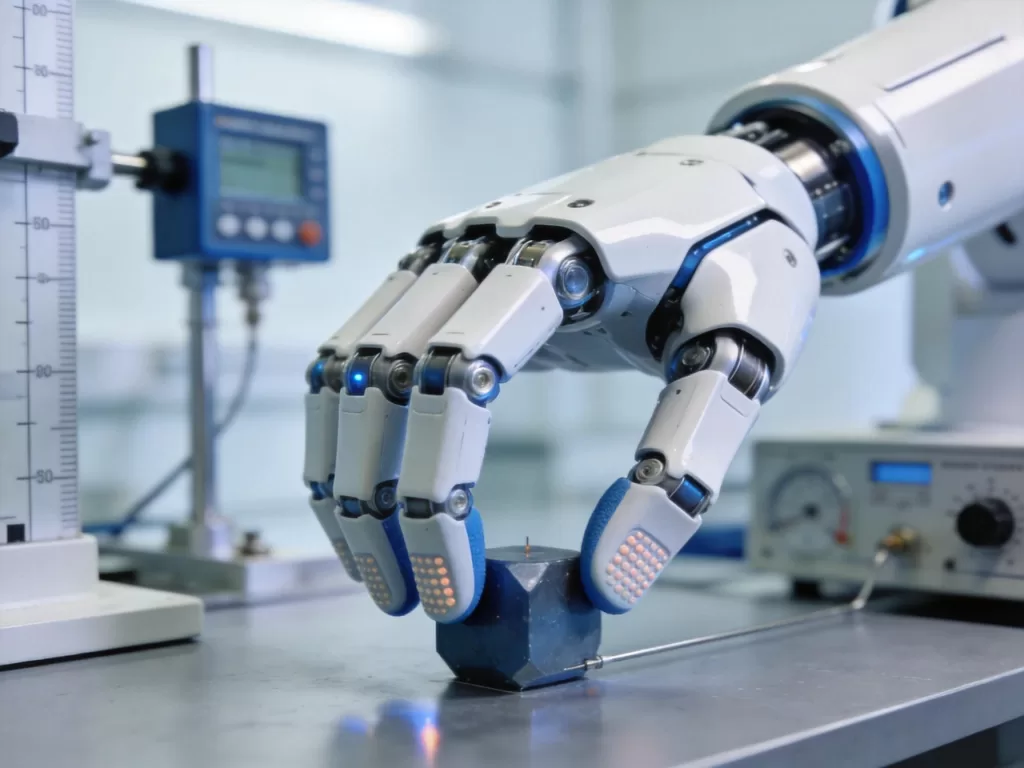
Zhou Xian believes the biggest barrier to bringing these systems to market lies in hardware and manufacturing. According to his statements, the company’s robotic hands can only withstand a few weeks of regular work before needing replacement.
That raises a crucial question for industrial robots: it isn’t enough for a machine to learn a task. It has to repeat it hundreds of thousands of times, safely and at a sustainable cost.
Demonstration vs. Commercial Product
- Object manipulation: a packing sequence was shown with robotic arms; consistency in prolonged operations remains to be verified.
- Learning: human data and simulations are used; how it generalizes to new objects and situations remains to be seen.
- Eno robot: there are prototypes and pilot tests; the independent performance of the complete system remains to be evaluated.
- Hardware: hands with sensors and force control; industrial durability remains to be demonstrated.
- Commercialization: there is funding and manufacturing preparation; evidence of scalability, costs, and sustained demand is still lacking.
What It Could Mean for the Future
The Genesis AI story connects with three major transformations: the future of industrial automation, the convergence of generative AI and robotics, and the economic implications of machines capable of performing manual tasks. If these systems mature, they could change logistics, manufacturing, and packaging. But that scenario depends on resolving questions of reliability, safety, and cost that remain open today.
When to See a Health Professional
Although this article is about technology, robotics in the workplace also touches on occupational health. If you work alongside automated machinery and experience persistent pain in your hands, wrists, or back, numbness, tingling, or injuries after an accident, you should consult a doctor or an occupational health professional. And if your company is introducing robots, it is reasonable to ask the relevant bodies and occupational risk prevention officers for information about safety protocols and training.
The Question That Matters
If AI can already think and write, what does it need in order to work with its hands? Genesis AI claims it has a good part of the answer and has enormous financial backing to prove it. The next revolution in artificial intelligence may not be about answering our questions better, but about acting on the physical world. To get there, however, demonstrations won’t be enough: we will have to see robots that work with the reliability that reality demands.