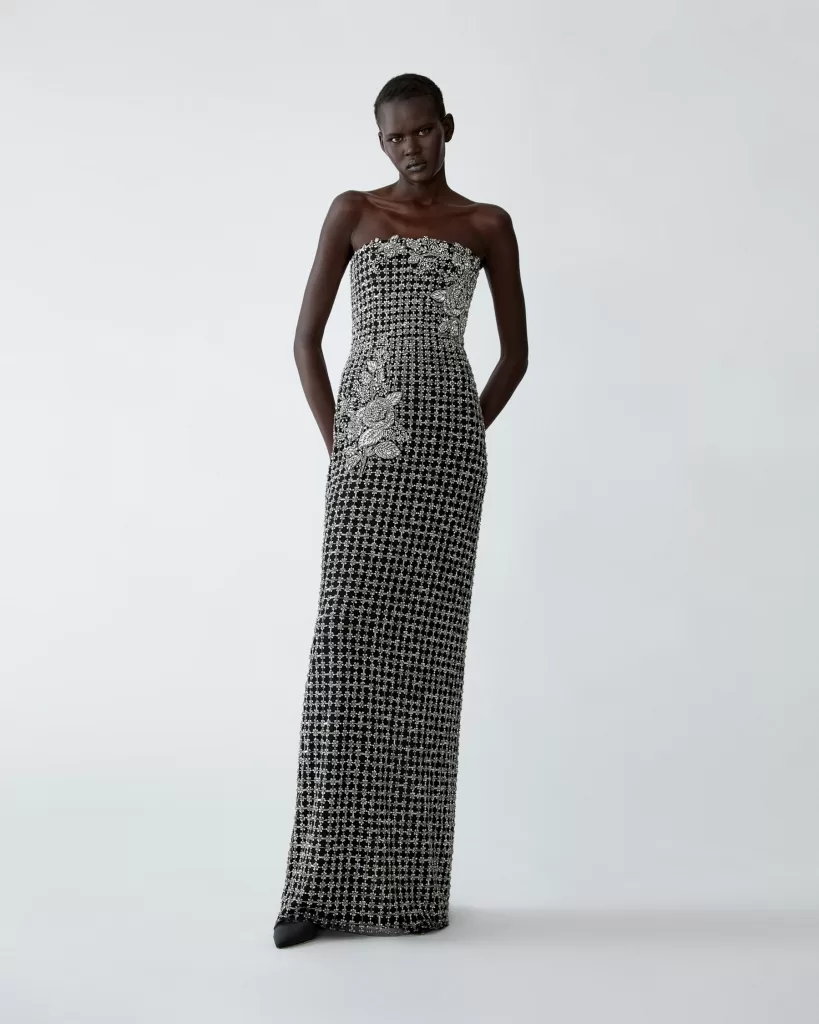
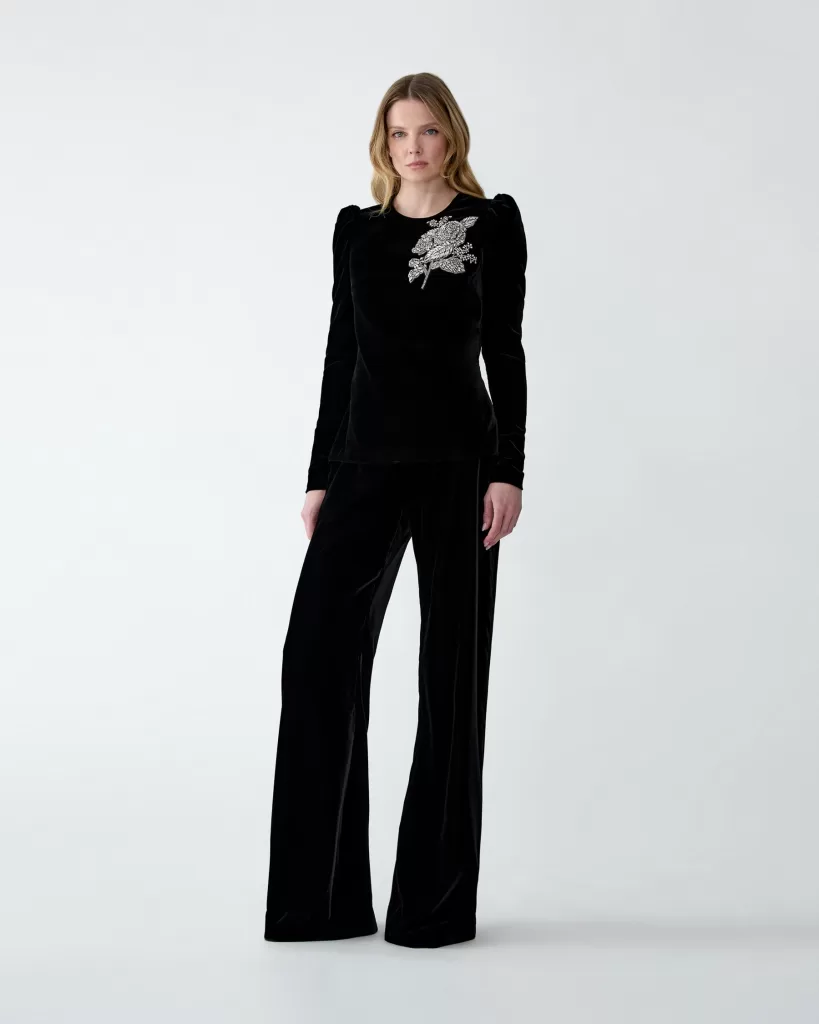
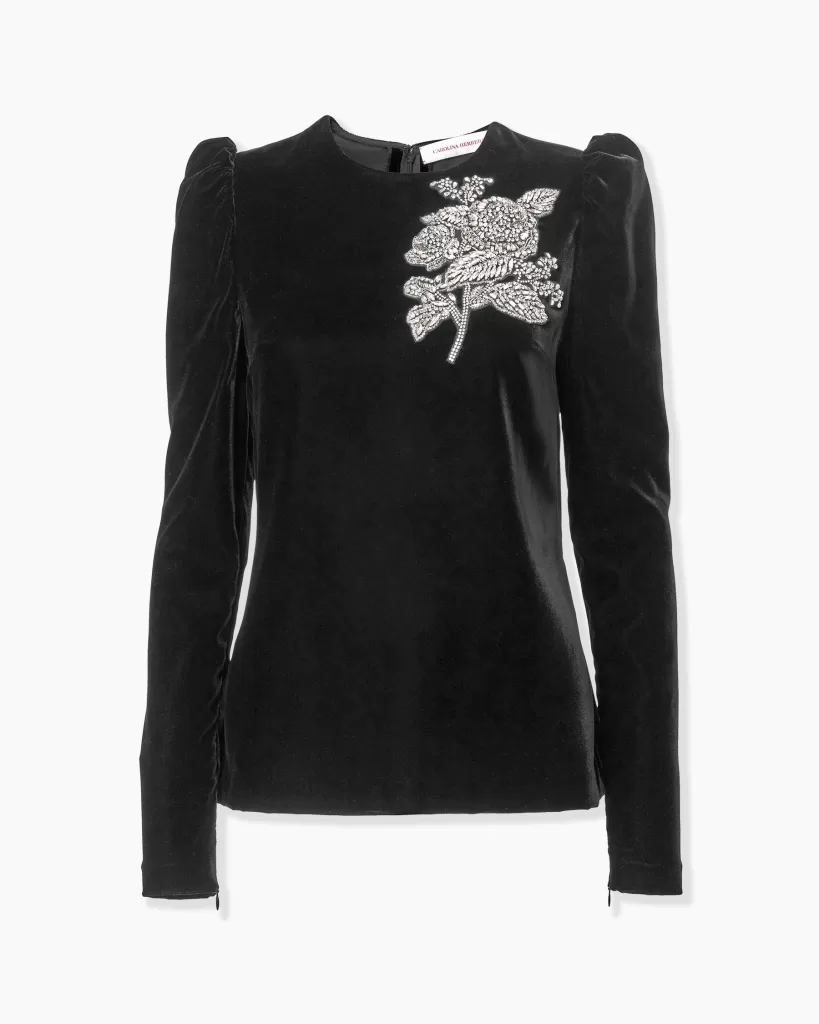
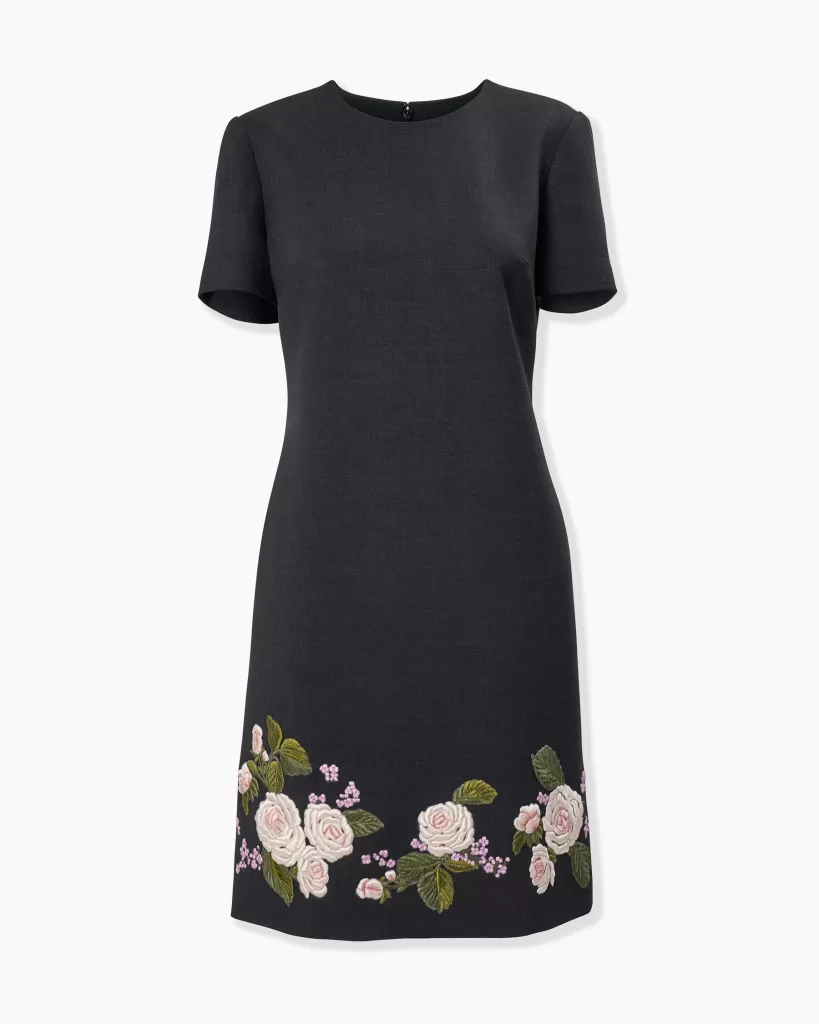
For years we have associated flowers with spring: fresh petals, bright colors and lightweight fabrics. Carolina Herrera’s Winter Flowers proposal, however, offers a different perspective. Here, floral romance doesn’t disappear with the cold; it changes tone, texture and attitude.
A central idea: the contrast between delicacy and restraint
The essence of this proposal lies in the dialogue between two worlds. On one side, the delicacy of flowers; on the other, the seriousness of wintry tones. That tension turns the floral print into something deeper than mere decoration: it becomes a statement of elegance designed for the cold months.
It is a reminder that romance doesn’t have to be naive. It can also be sophisticated, structured and full of character.
Two textile techniques that explain it all
The description of the proposal highlights two techniques that work almost as a summary of its aesthetic.
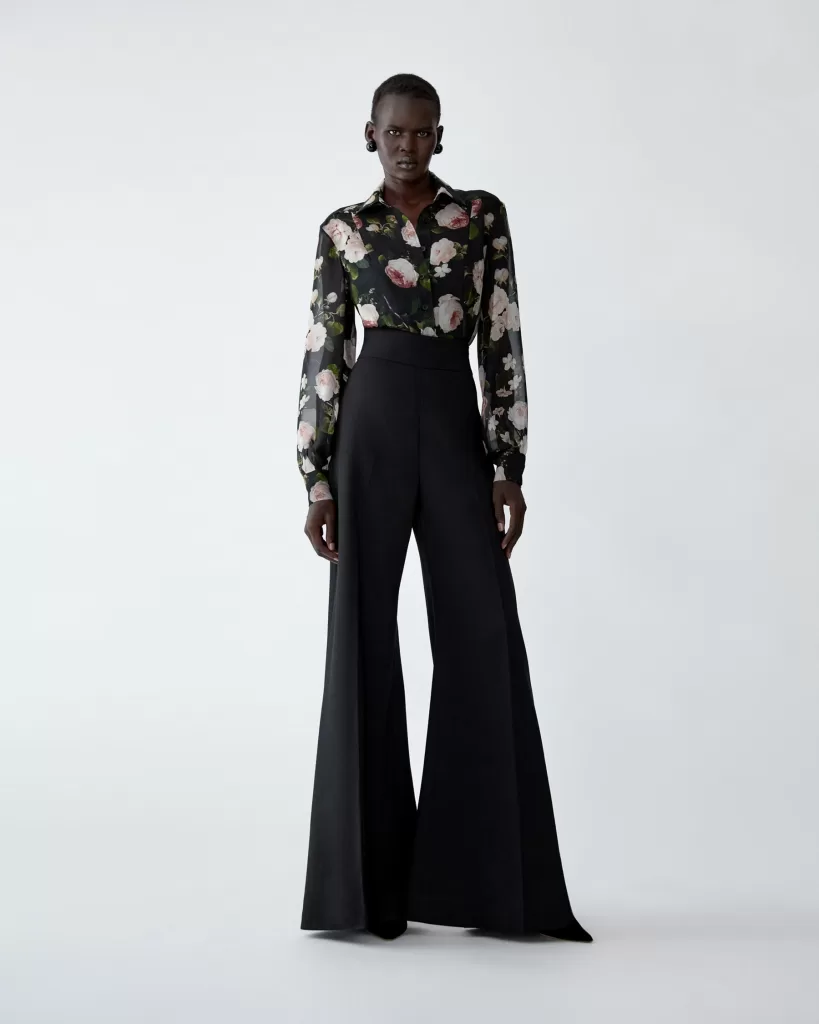
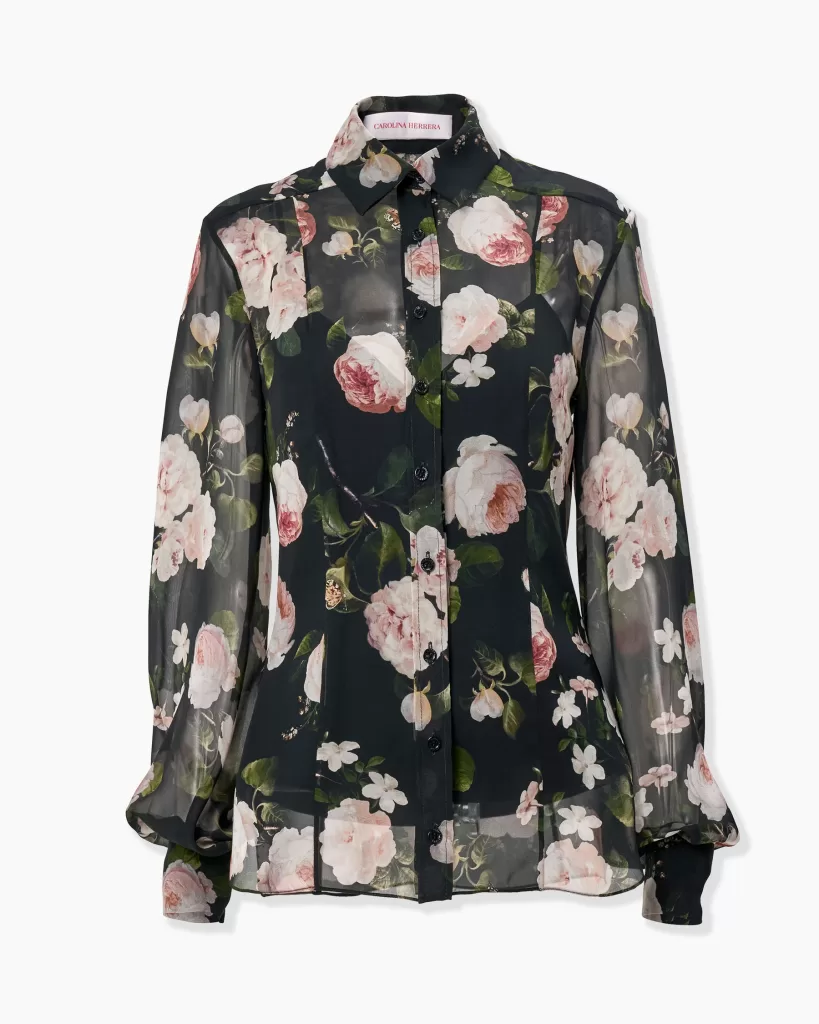
Floral motifs on silk chiffon
Silk chiffon is synonymous with lightness and movement. When flowers are printed or rendered on this fabric, they become fluid, almost ethereal. It is the element that brings softness to the proposal and allows the floral motif to “breathe” even in a season dominated by layers and heavy fabrics.
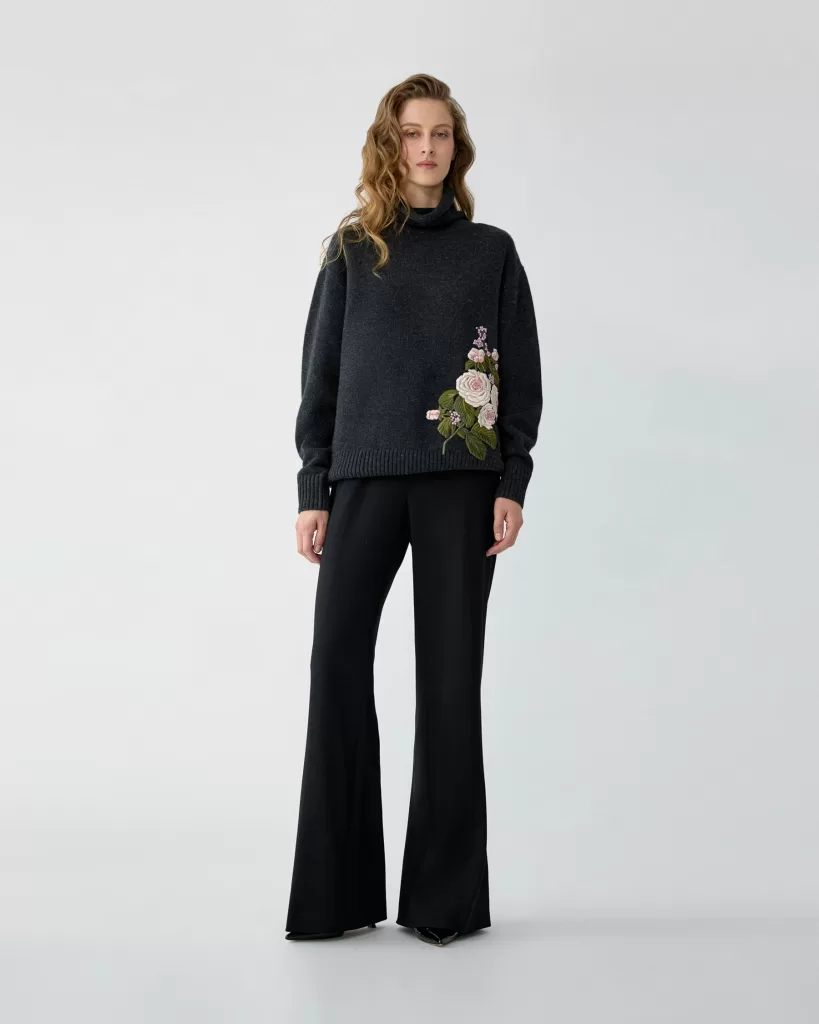
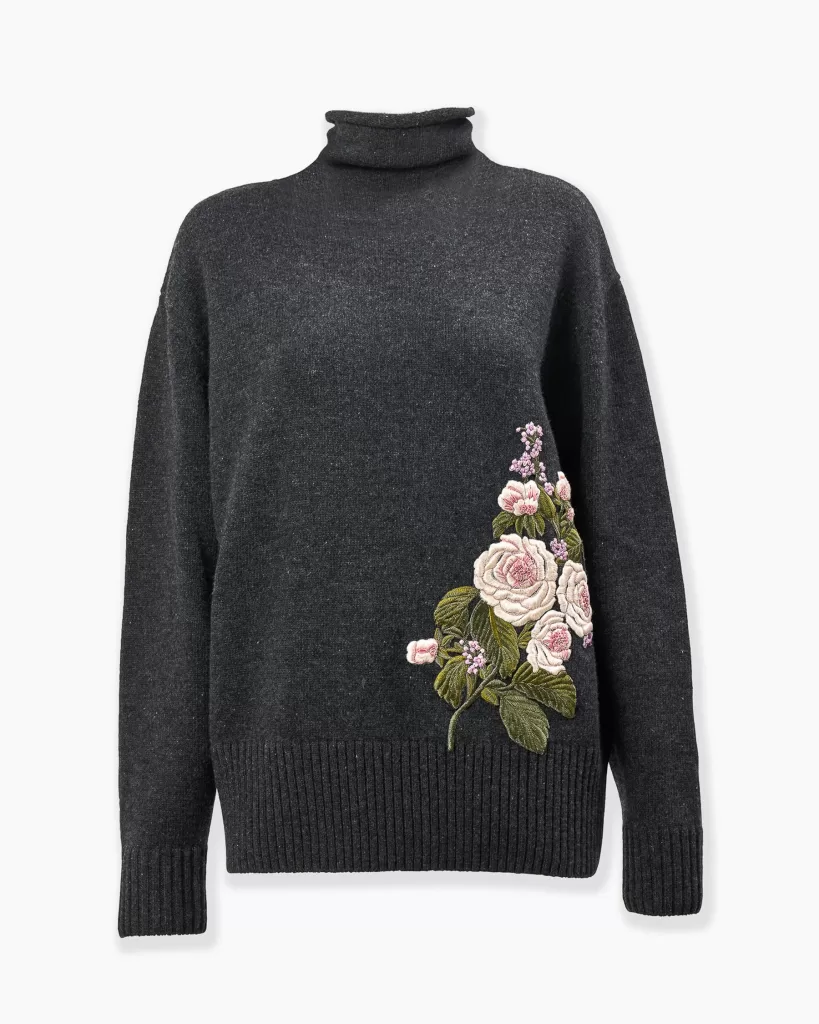
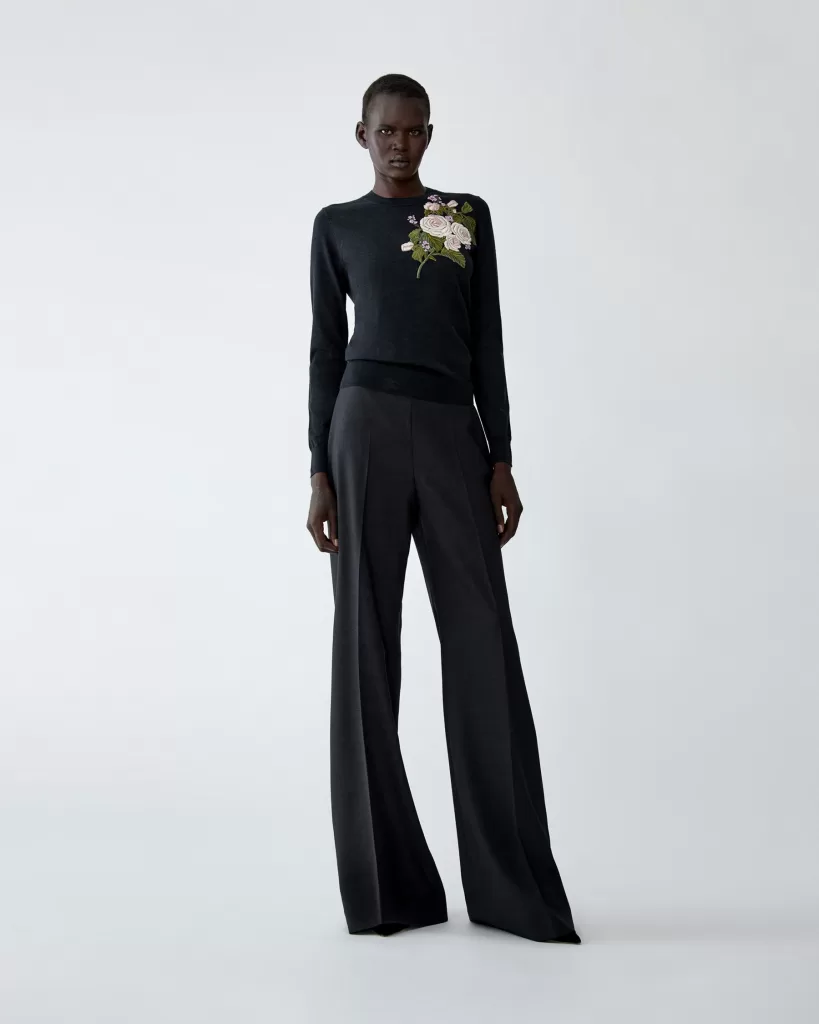
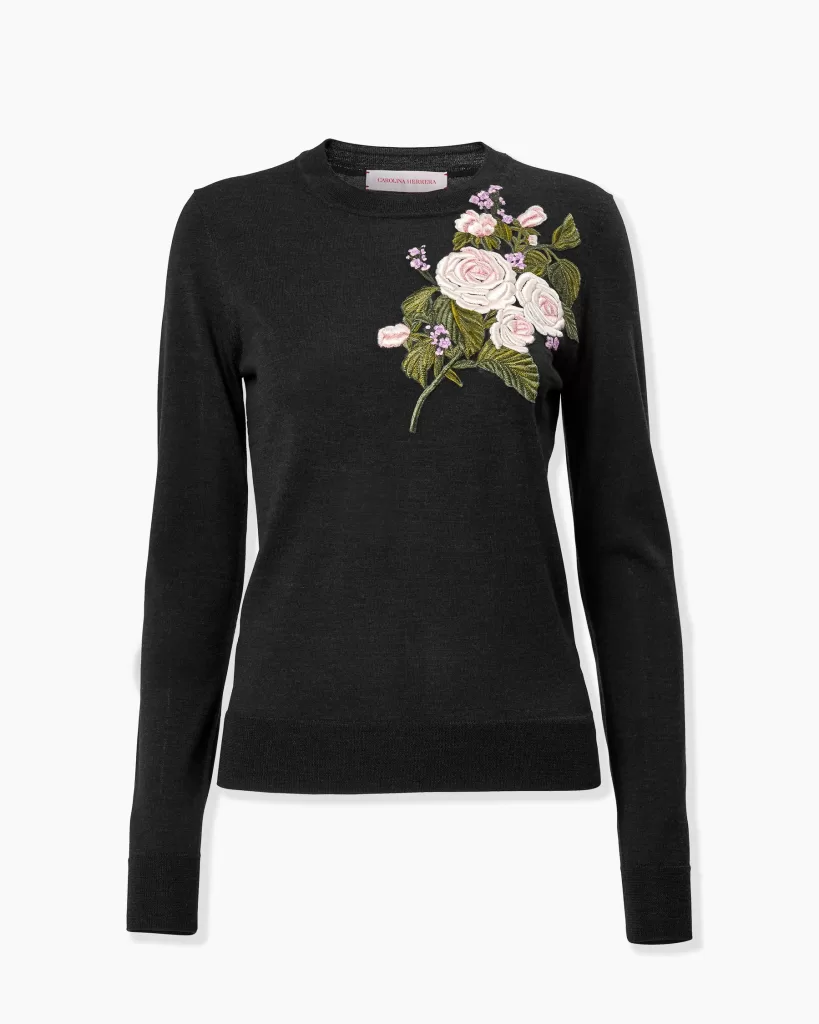
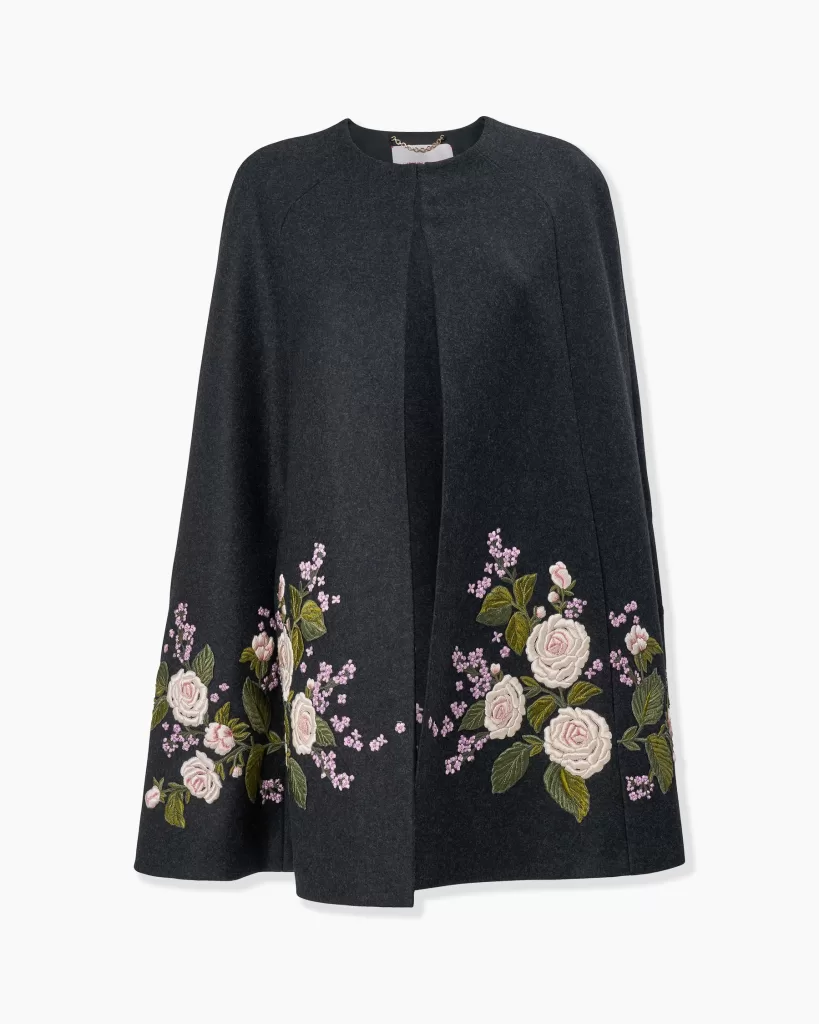
Raised embroidered roses on anthracite gray wool
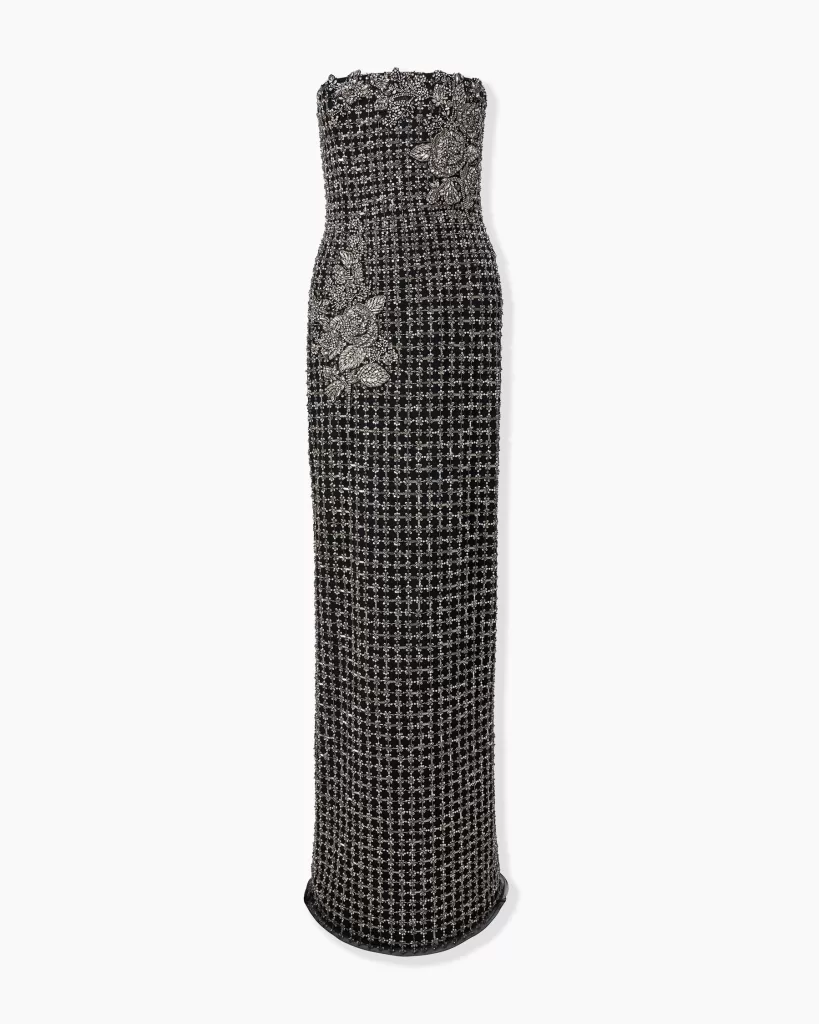
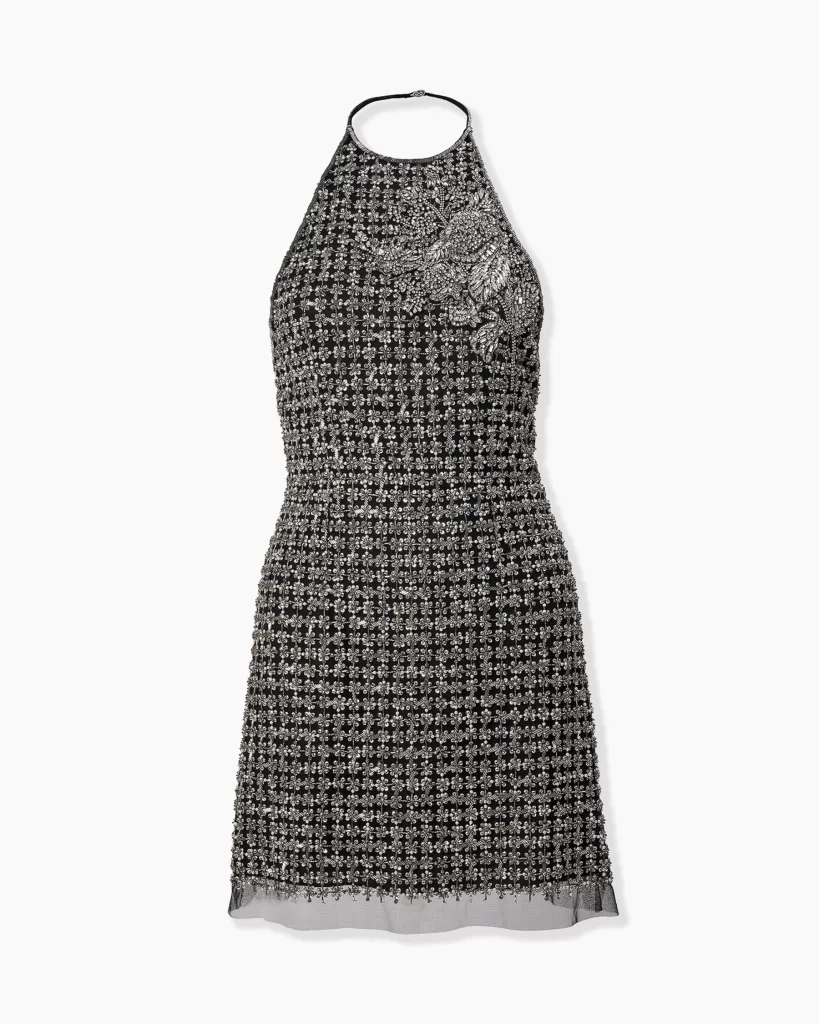
At the opposite end comes anthracite gray wool, a deep, sober and very wintry shade. On it, raised embroidered roses add texture and depth. Three-dimensional embroidery turns the flower into an almost sculptural object, appreciated as much by sight as by touch.
The result is a play of materials: the vaporous against the structured, the luminous against the somber, the fleeting nature of the flower against the permanence of handcrafted work.
Why flowers do belong in winter
This proposal shows that flowers don’t belong exclusively to spring. You only need to change three variables:
- The material: fabrics with body or structure, such as wool, instead of only very light fibers.
- The technique: embroidery and raised details that add volume in contrast to flat prints.
- The palette: more muted, deeper tones that soften the prominence of color.
With these adjustments, a classic motif is updated and adapted to the cold season without losing its romantic character.
How to bring this idea into your wardrobe
You don’t need a luxury label to play with this concept. What’s interesting about the proposal is the logic behind it, and that can be adapted to different styles, ages, body types and budgets.
Mix textures without fear
A flowing blouse or dress with floral motifs can be paired with a wool coat or blazer in a dark shade. The contrast between the light and the structured is precisely the spirit of this proposal.
Start with a detail
If you prefer something discreet, you can introduce the floral motif through a scarf, a shawl, a brooch or a small embroidered detail on a collar or cuff. Raised flowers also work as an accent on basic garments.
Play with the palette
Anthracite gray is a very versatile starting point, but the underlying idea is to choose muted tones that make the floral motif stand out. Each person can choose the shades that suit them best or that they feel most comfortable in.
Affordable and sustainable options
- Browse secondhand shops and flea markets for garments with floral prints or embroidery.
- Customize a plain piece you already own with an embroidered patch or a small handmade touch.
- Opt for timeless pieces you can reuse across different seasons.
- Support local workshops and artisans who work with embroidery.
Winter flowers are not a matter of size, age or budget, but of how you choose to combine softness and character in the way you dress.
The evolution of romance in fashion
This proposal also invites us to think about how romance has changed in contemporary fashion. It is no longer limited to the sweet or the delicate: it can rely on craftsmanship, texture and chromatic restraint. It is a more mature romanticism, where handwork and the contrast of materials take center stage.
A note before you get carried away
The available information describes the aesthetic of Winter Flowers, but does not specify details such as the official name of the collection or the season it belongs to. If you want to know the exact details, the best option is to consult the label’s official channels.
In summary
At Carolina Herrera, winter flowers find a new expression between the softness of silk and the strength of wool. It is an invitation to see romance as something that also fits into cold days and that, among chiffons and raised roses, becomes a statement of elegance.