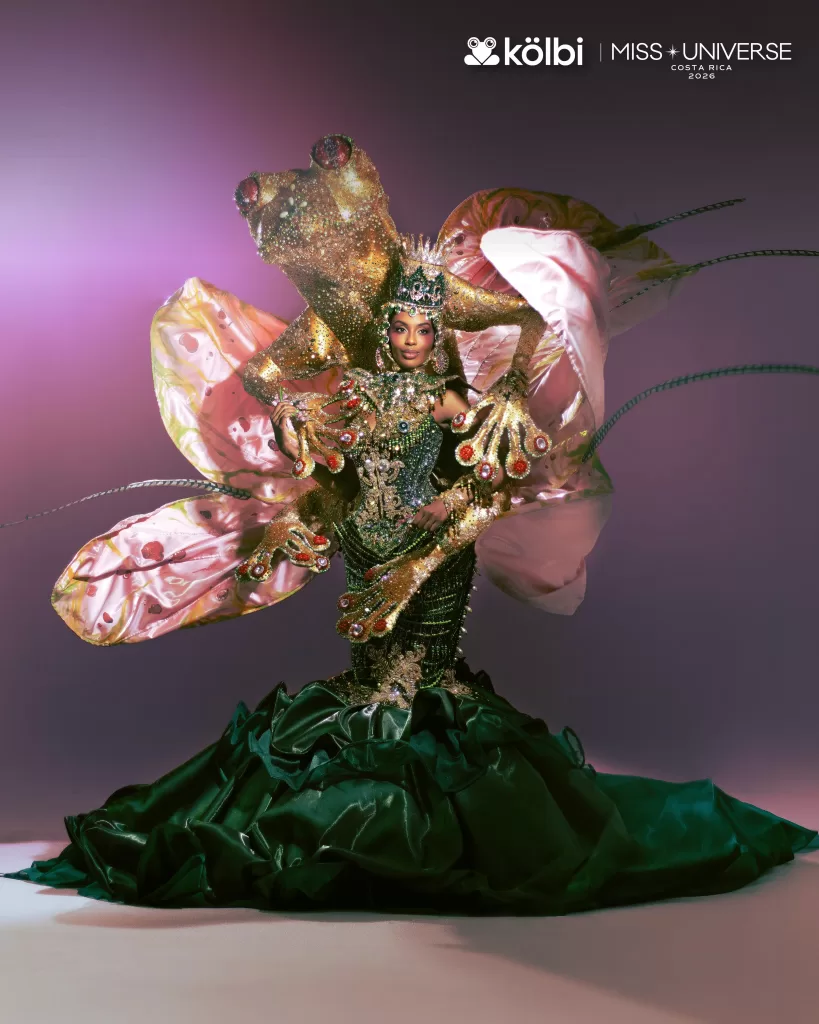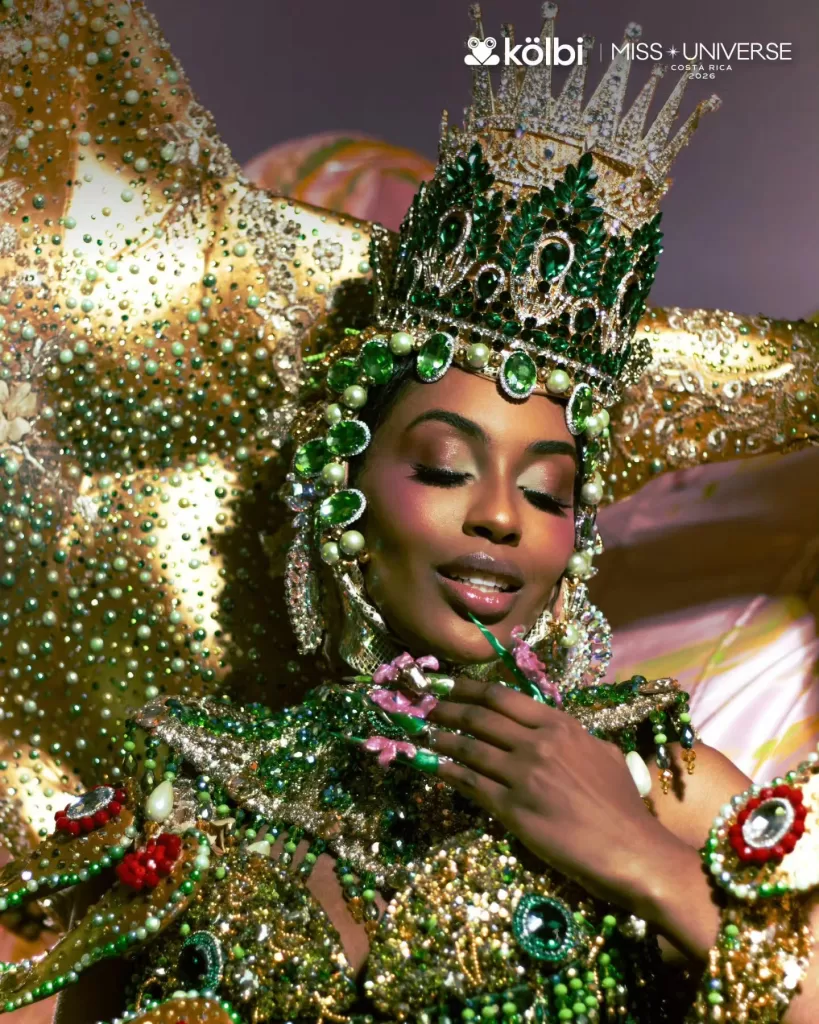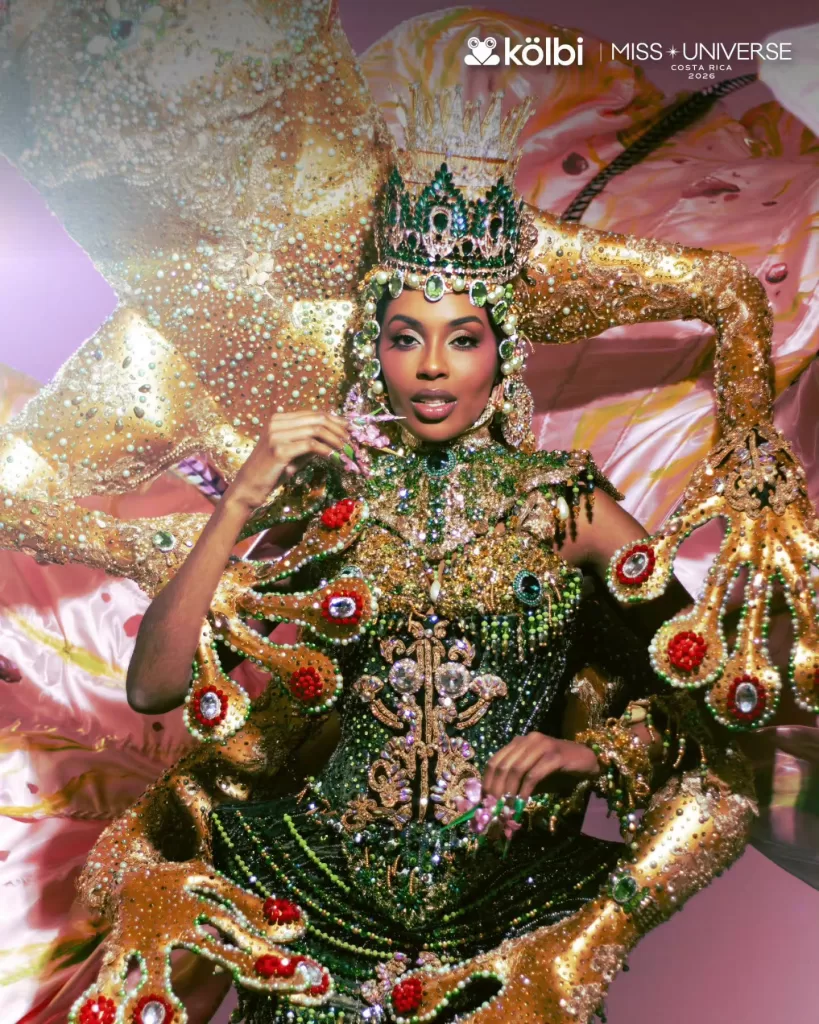
When Mariale Acosta appeared in her national costume on the Miss Universe 2026 stage, the moment was much more than a parade of eye-catching gowns. Behind every plume, crystal, and sculpted detail is a way of telling where a person comes from. That is why it is worth taking a closer look at what Costa Rica’s costume represents and what the Central American proposals have in common.
What Costa Rica’s costume features
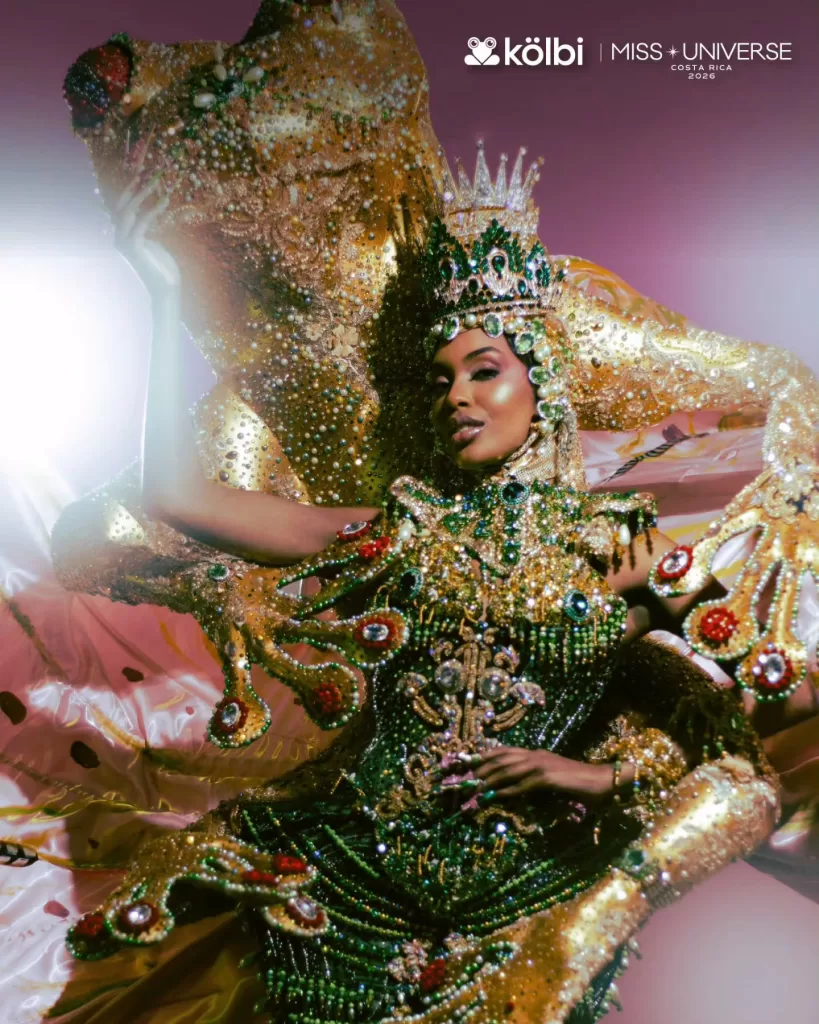
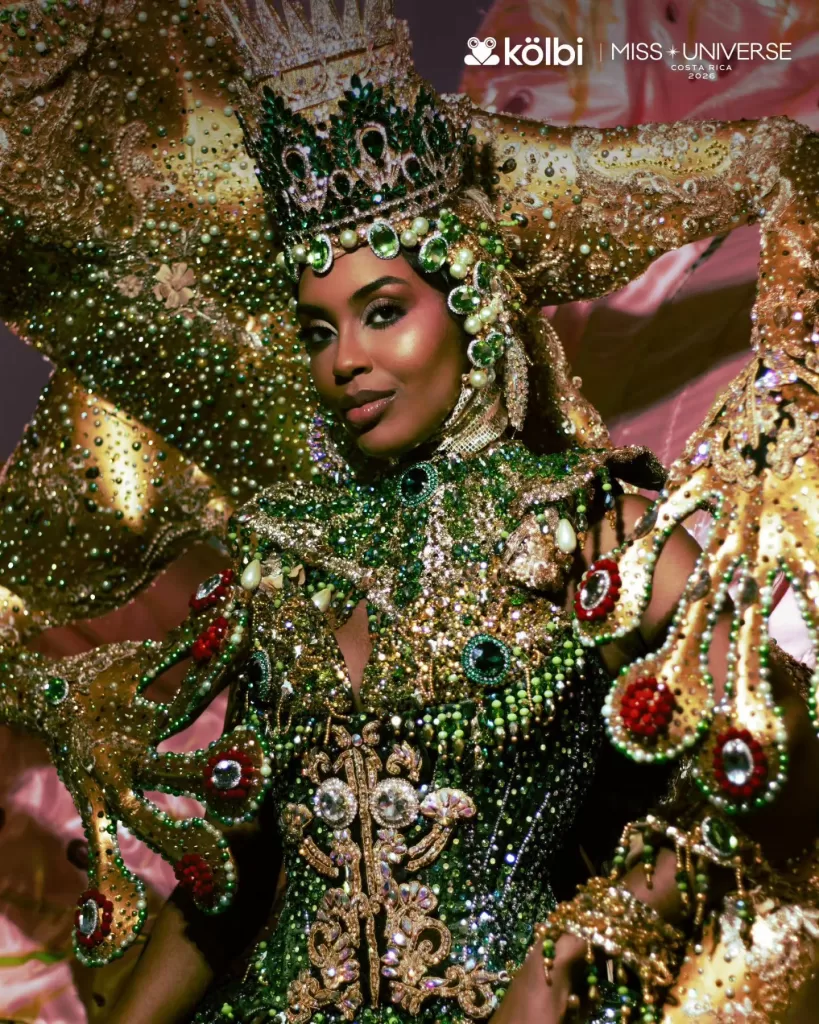
According to CR Hoy, Costa Rica’s representative wore a creation called Goddess of the Golden Tropics, inspired by the country’s biodiversity. According to the Miss Universe Costa Rica organization, the design is built around two emblematic species: the golden frog and the red-eyed frog. The proposal also includes the purple guaria, the national flower, which the organization presents as a symbol of hope and good fortune.
The most striking piece is on the back, where the golden frog stands out. According to the organization, it was built with a lightweight wire and EVA foam structure, then sculpted, painted in golden tones, and decorated with crystals. The idea is to evoke Indigenous goldsmithing and turn the animal into a large-scale jewel that accompanies the silhouette.
Handcrafted work from many hands
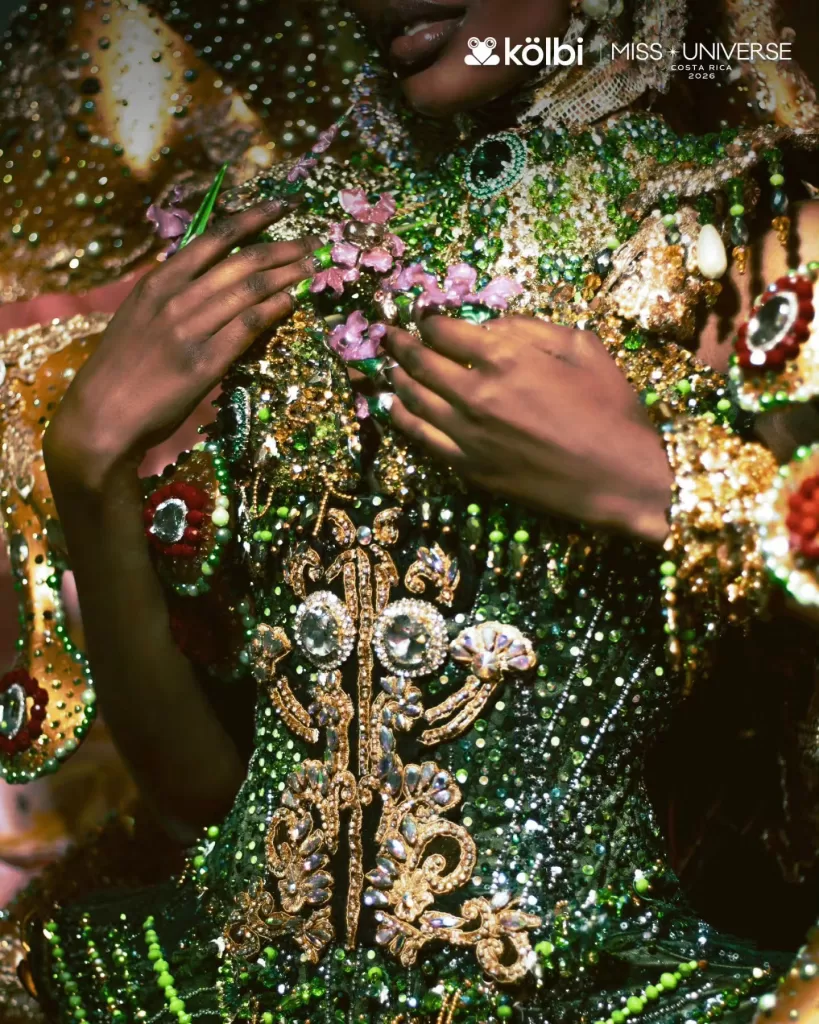
The creation was led by Mexican designer Valencia Gonzaga, together with Jessica Valencia, Sandra García, Miranda López, and Baltazara Bracadavra, according to the organization. The team described a process that included pattern making, sewing, embroidery, crystal application, jewelry making, and the sculpting of special pieces. Their philosophy, in their own words, values attention to detail and the worth of handmade work.
This point matters more than it might seem. A competition costume can look like a fleeting object, but behind it are techniques passed down from generation to generation, such as embroidery, working with materials, and the patience of the craft.
What the other costumes in the region say
La Nación Costa Rica reported that the seven Central American representatives presented proposals reflecting nature, culture, and identity. Among them, Gabriela González del Valle of Panama stood out with Diosa Panamá: El Oro Verde, a piece that highlights the country’s forests and wildlife. Luisa Paola Pineda represented Honduras with a design by creator Franklin López.
Although each costume has its own language, the common thread is the same: using landscape, animals, and flowers as a starting point to speak about a country without words.
How to bring identity into your everyday clothing
You don’t need a competition costume to draw inspiration from these proposals. Some accessible ideas:
- Nature tones: a sweater or blouse in greens, golds, or purples from your favorite store or from secondhand shops captures the same spirit without overspending.
- Accessories with a story: earrings or necklaces from local artisans, woven or made with seeds, pair well with basic pieces.
- Embroidery and appliqués: an embroidered patch on an old jacket adds personality and extends the life of the garment.
If you want to follow the latest trends in the sector, this roundup of fashion and beauty news brings together launches and experiences of the season.
The essentials
- Mariale Acosta presented a costume at Miss Universe 2026 inspired by Costa Rica’s biodiversity, with the golden frog as its central piece.
- The creation was handmade by a team led by Valencia Gonzaga, using sculpting, embroidery, and jewelry techniques.
- Central American proposals use nature and culture as a language of identity.
- Fashion with identity can be carried into everyday life through accessible pieces with a story.
Santé Press Insight
Santé Press reading: Mariale Acosta’s costume works as a small lesson on how identity is built in fashion. When a design draws on a country’s fauna, flora, and craftsmanship, it stops being just a costume and becomes a narrative. The regional trend shows that value does not always lie in luxury, but in the story a garment manages to tell.
What to watch for:
- Distinguish between the organization’s description and the evidence of the final result, especially when discussing symbols and traditions.
- Avoid impulse purchases of “traditional costumes” at high prices: look for verifiable artisans and locally made pieces.
- Check the official information from the competition before sharing dates or details of the show.
News sources
- CR Hoy: Así es el traje típico que luce Mariale Acosta en Miss Universe 2026
- La Nación Costa Rica: Miss Universo 2026: vea los espectaculares trajes nacionales de las centroamericanas
- CR Hoy: (Video) Miss Universe Costa Rica lista para desfile de trajes nacionales
Keep reading on Santé Press
- Fashion and beauty news for November 2026: seven launches and experiences that define the season
- 1920s-inspired skirts: five elegant ways to wear them in 2026
- How to style wide-leg jeans in 2026: 7 looks with ankle boots, heels, and loafers