According to an interest signal based on Wikipedia visits, the name Ferran Adrià is among the most searched topics right now. This is no coincidence: few chefs have changed the way we think about cooking as much as he has, and his restaurant, elBulli, became a kind of laboratory that cooks from around the world watched with curiosity and, at times, disbelief. Understanding what happened there helps us read today’s menus more clearly, from creative tapas to dishes that look like paintings.
A Restaurant Shaped Like a Workshop
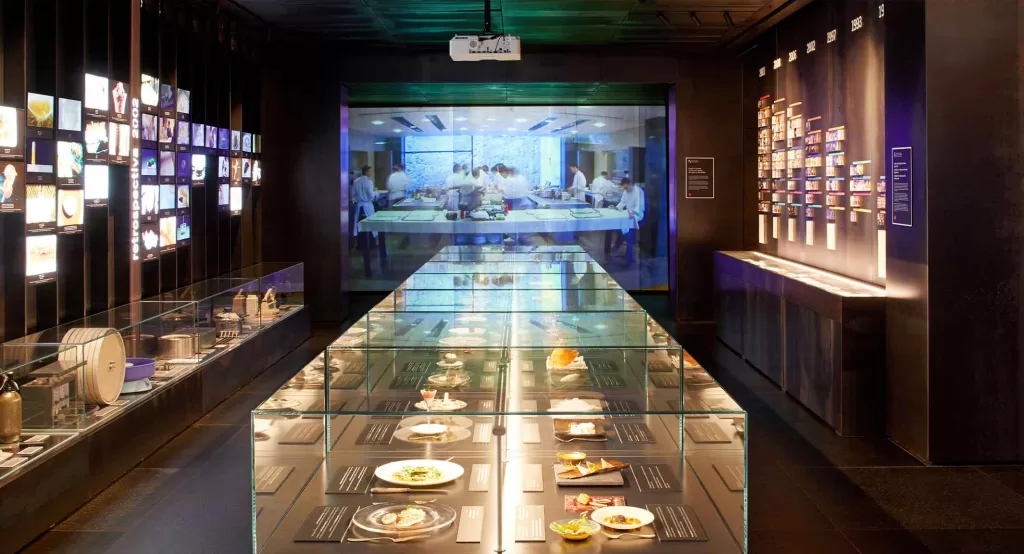
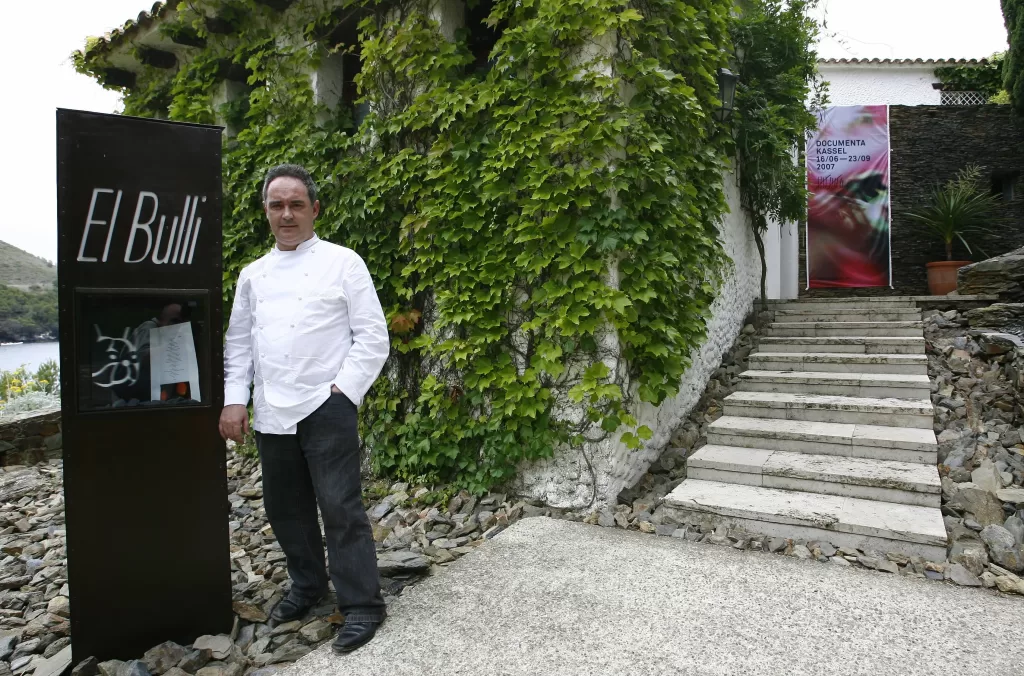
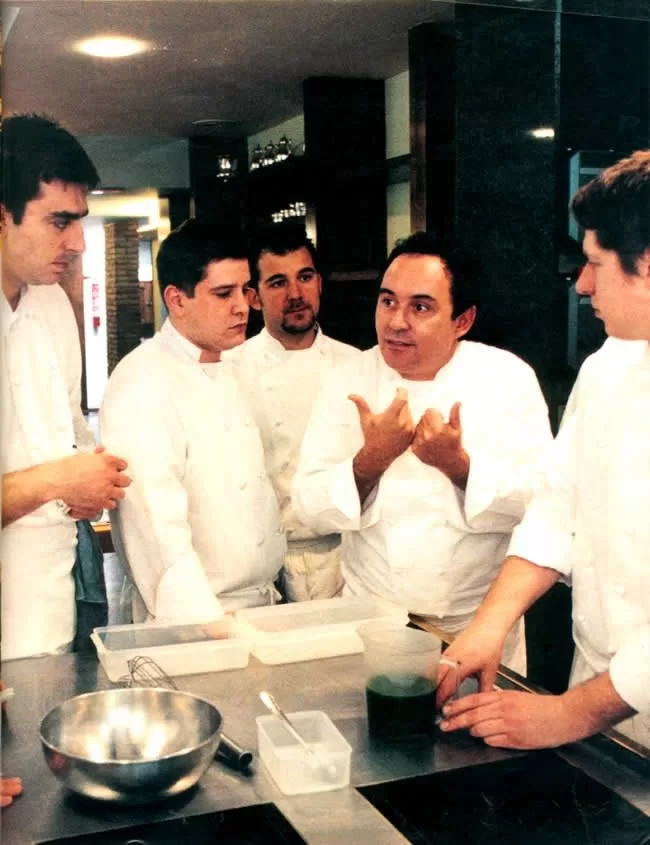
elBulli was in Roses, on the coast of Girona, and operated for part of the year. What set it apart was not only the food but the method. Each season, the team reinvented much of the menu. Dishes came out of tests, discards, and notes, and many never reached the public. That rhythm turned the restaurant into a workshop of ideas rather than a place that repeated recipes.
This way of working explains much of its influence. For many cooks, elBulli showed that creativity could be organized as a process: observe, test, record, correct, and test again. It was not about occasional inspiration but about discipline.
The Techniques That Changed Cooking
One of the best-known contributions was spherification, which gives a liquid the shape of a sphere through a gentle chemical reaction between hydrocolloids and a calcium bath. The result is a capsule that bursts in the mouth and releases its flavor. It looks like a laboratory trick, but its logic is simple: change the texture without altering the base flavor too much.
Another technique associated with that period was the use of foams, prepared with siphons and air or gas to create light preparations that keep the aroma of an ingredient in an unexpected form. Gelifications, emulsions, and precise temperature work also became popular. All of them share a common goal: to let the diner perceive the same ingredient in new ways.
It is worth remembering that these techniques were never an end in themselves. In elBulli’s kitchen, science was a tool for answering questions about flavor and texture, not a spectacle. That is why many chefs who learned from this approach use technique today with more restraint and with a clear question behind it.
Deconstruction and Play with Memory
Another idea associated with Adrià’s style is deconstruction: separating the components of a traditional dish and presenting them in parts, with different textures and temperatures, so that the diner mentally rebuilds the whole. A tortilla, a sandwich, or a classic dessert could appear transformed, yet with recognizable flavors.
This play with memory has cultural value. It invites us to look at traditional cooking with fresh eyes and to ask what makes a dish what it is. For the public, it is an experience that mixes surprise and recognition. For other cooks, it was an invitation to revisit inherited recipes without losing their roots.
Why His Legacy Is Still Alive
elBulli’s impact can be seen on three levels. The first is technical: many tools of contemporary cooking, such as hydrocolloids, siphons, and controlled-temperature baths, are now used in restaurants of all kinds. The second is conceptual: the idea that a menu can be a research project and not just a fixed list spread among younger chefs. The third is cultural: the restaurant helped gastronomy be seen as a field of knowledge, with documentation, books, and debate.
There was also an effect on how knowledge was shared. The team published catalogs and reflections on their work, allowing others to study their processes. That openness helped creative cooking stop being a kitchen secret and become a subject of public discussion.
How to Read Creative Cuisine Today
If creative cooking interests you, it helps to distinguish between innovation and spectacle. An innovative dish should have a reason to exist: improving flavor, exploring a texture, or saying something about the ingredient. When technique becomes the protagonist and flavor is pushed into the background, something is not working.
To explore this world without booking a major restaurant, you can start by reading about basic techniques, observing how ingredients behave with heat or cold, and paying attention to menus that change with the seasons. Another way in is to compare styles: Adrià’s, focused on research and technique, and that of other chefs who work with tradition and fire, as shown in the guide to Francis Mallmann’s slow-fire cooking. Both paths show that creativity in the kitchen can take very different forms.
If you cook at home, elBulli’s ideas can be applied in simple versions: playing with temperatures, contrasting textures, or presenting a familiar ingredient in a different way. You don’t need a laboratory, just curiosity and patience to experiment.
The Essentials
- Ferran Adrià and elBulli transformed the way we think about creative cooking, with a method based on constant research.
- The restaurant worked like a workshop: menus were reinvented, and many ideas never reached the final menu.
- Techniques such as spherification, foams, and deconstruction changed the way texture and flavor are worked.
- His legacy can be seen in technical tools, in the idea of the menu as research, and in the way gastronomic knowledge is shared.
- Technique should serve flavor; the best creative cuisine answers a clear question.
Santé Press Contribution
Santé Press reading: The case of elBulli suggests that gastronomic innovation does not arise from the element of surprise but from a method. The most valuable part of that legacy may not be any specific technique, but the habit of testing, discarding, and documenting. In a world where menus are measured by the photo they generate, that discipline remains a useful lesson for any cook, and for anyone who eats out.
What to watch for:
- Ask yourself whether a technique improves the flavor or only attracts attention.
- Check whether the menu explains the reasoning behind its preparations; coherence is usually a good sign.
- If you want to try techniques at home, start with simple changes and follow instructions from reliable sources, especially when working with additives or chemical processes.
Question for you: Which traditional dish from your family would you change, and what ingredient or technique would you use to tell its story in a new way?
Continue Reading on Santé Press