
The niche fragrance market is undergoing accelerated growth. Consumers seek unique, authentic, and sophisticated scents that reflect their identity. This trend has positioned the niche fragrance market as one of the fastest-growing sectors in luxury perfumery. In 2024, it reached a global value of $2.4 billion, and it’s projected to climb to $8.12 billion by 2033, with a CAGR of 14.5%.
A craving for exclusivity
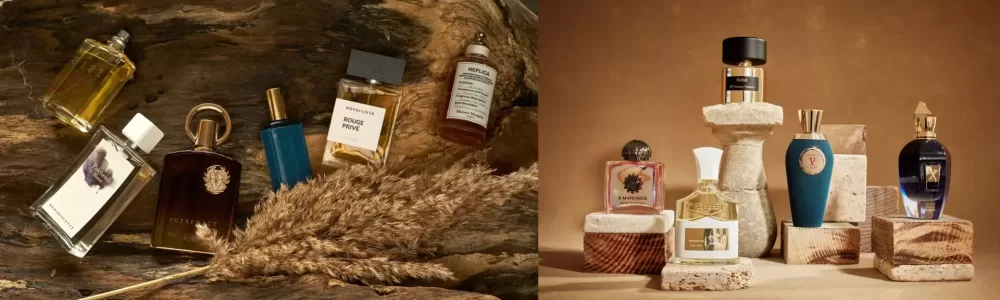
Shoppers are turning away from mass-market fragrances. They prefer perfumes that tell a story and feel handmade. Niche brands stand out by using rare ingredients, original formulas, and limited editions. This authenticity appeals to those who want to stand out and embrace more eco-conscious options.
Quality over quantity
Independent perfume houses prioritize quality. They invest in natural raw materials, renowned perfumers, and artisanal processes. Amouage, for instance, uses over 50 ingredients in some creations—many of them natural and rare. This approach results in complex, long-lasting, and memorable fragrances.
Emotion and storytelling
The niche fragrance market thrives on emotional connections. Each fragrance is a sensory story that invites the wearer to become part of it. This deep narrative sets niche brands apart from traditional commercial campaigns that rely on celebrities or visual clichés.
Immersive experiences
Indie brands curate every consumer touchpoint. From exclusive boutiques to personalized consultations, the buying experience becomes a ritual. Social media and e-commerce have also democratized access to niche scents, expanding their global reach.
Inspiring strategies
Marc-Antoine Barrois and Amouage are leading examples. The former merges haute couture with creative collaborations. The latter, based in Oman, has scaled globally by controlling its supply chain and growing slowly. With annual sales up to $80 million in 2024, Amouage proves how profitable this model can be.
From counterculture to business model
The niche fragrance market began as a reaction to repetitive commercial perfumes two decades ago. Today, that artisanal spirit not only persists—it leads the luxury future. Authenticity, emotional connection, and sensory storytelling are now key to success.
The niche fragrance market has proven that quality, artistry, and differentiation are increasingly valued. Indie brands aren’t just surviving—they’re leading, offering deeply resonant experiences. This olfactory revolution is already defining the new era of luxury perfumery.