
If you’ve ever seen an infographic ranking the foods with the most iron or the most protein, you’ve probably wondered whether you should fill your cart only with the items at the top of the list. The short answer is no. Eating better isn’t about chasing the highest number. It’s about understanding what each food provides, how much of it you actually eat, and how to pair it with other foods. In this guide we review six key nutrients (protein, iron, vitamin C, omega-3, magnesium and fiber) with simple examples that are easy to find in Costa Rica.
Why do we need different nutrients?
The body is a machine with many moving parts working at once. Some nutrients help build and repair tissues, others carry oxygen, others take part in muscle and nerve function or support digestion. No single food provides everything, which is why health organizations usually recommend a varied diet based on minimally processed foods: vegetables, fruits, legumes, whole grains, nuts, seeds and good-quality protein sources.
Before getting started, a useful warning: food composition tables, and viral infographics even more so, give approximate values. They change depending on the cut, the variety, the preparation, the water content and the database consulted. Use them as a guide, not as absolute figures. For more detailed data, you can check reputable databases such as USDA FoodData Central or the fact sheets from the NIH Office of Dietary Supplements.
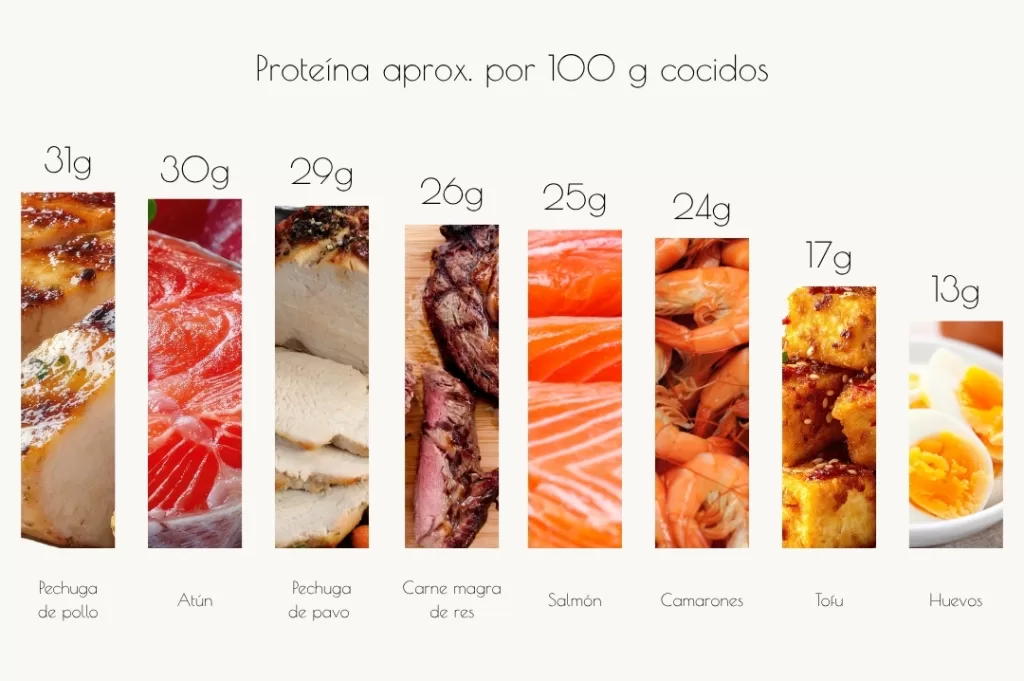
Protein: build and repair
Protein plays a role in maintaining and repairing tissues, in forming enzymes and in many other functions. Protein-rich foods include both animal and plant-based options.
Animal and plant sources
- Animal: chicken, fish, eggs, meat and dairy.
- Plant: beans, lentils, chickpeas, tofu, tempeh, nuts and seeds.
Animal proteins usually contain all the essential amino acids in adequate proportions. Plant proteins may be lower in some of them, but combining legumes with grains throughout the day (like the classic rice and beans) rounds out the profile very well.
Be careful with per-100-gram comparisons
A food that is raw, cooked, dried or canned has very different values per 100 grams, mostly because of the water. Besides, nobody eats exactly 100 grams of everything. It’s better to think in real portions: one egg, a plate of lentils, a piece of fish about the size of the palm of your hand.
Iron: oxygen for the whole body
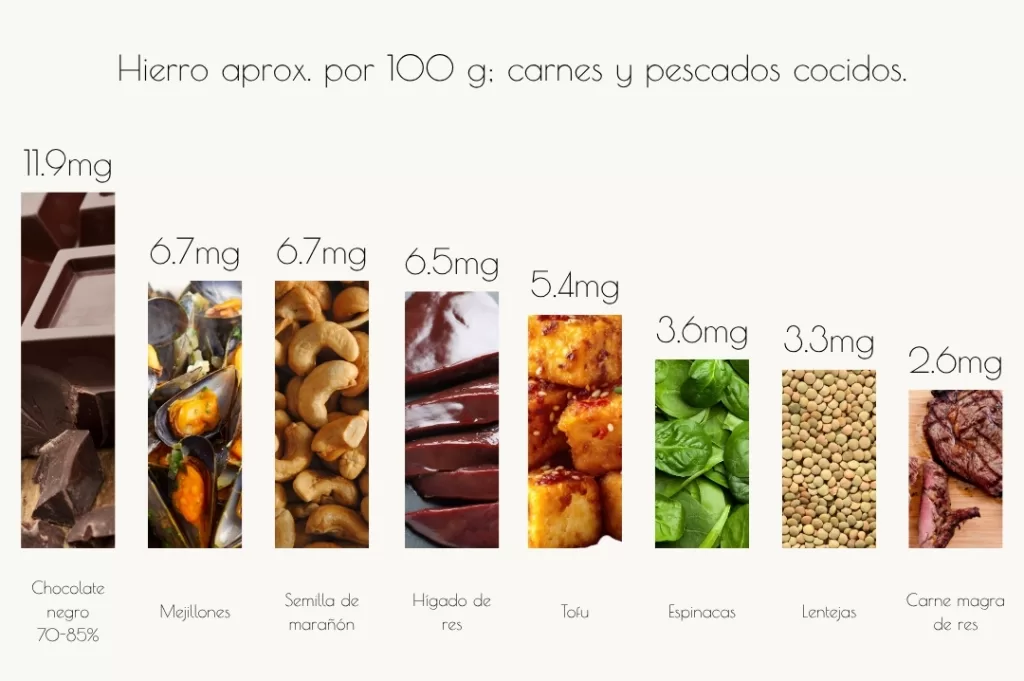
Iron is needed to form hemoglobin, the protein in red blood cells that carries oxygen. This is where looking only at milligrams is most misleading, because there are two types:
- Heme iron: found in meat, poultry, fish and seafood. It is absorbed more easily.
- Non-heme iron: found in legumes, seeds, fortified cereals and leafy green vegetables. Its absorption is lower and more variable.
How to help absorption
Vitamin C promotes the absorption of non-heme iron, so pairing a legume with a fruit or vegetable rich in it is a simple strategy. On the other hand, tea, coffee and some dairy products consumed with a meal can reduce absorption, so it is sometimes advised to keep them apart from main meals, especially if there is a risk of iron deficiency.
A very local example: beans with chopped sweet pepper, or lentils with orange or lime juice on the side.
The iron values of foods such as dark chocolate, cashews or tofu vary a lot depending on the product and brand, so don’t count on them as a guaranteed source without checking the label.
Vitamin C: more than something “for colds”
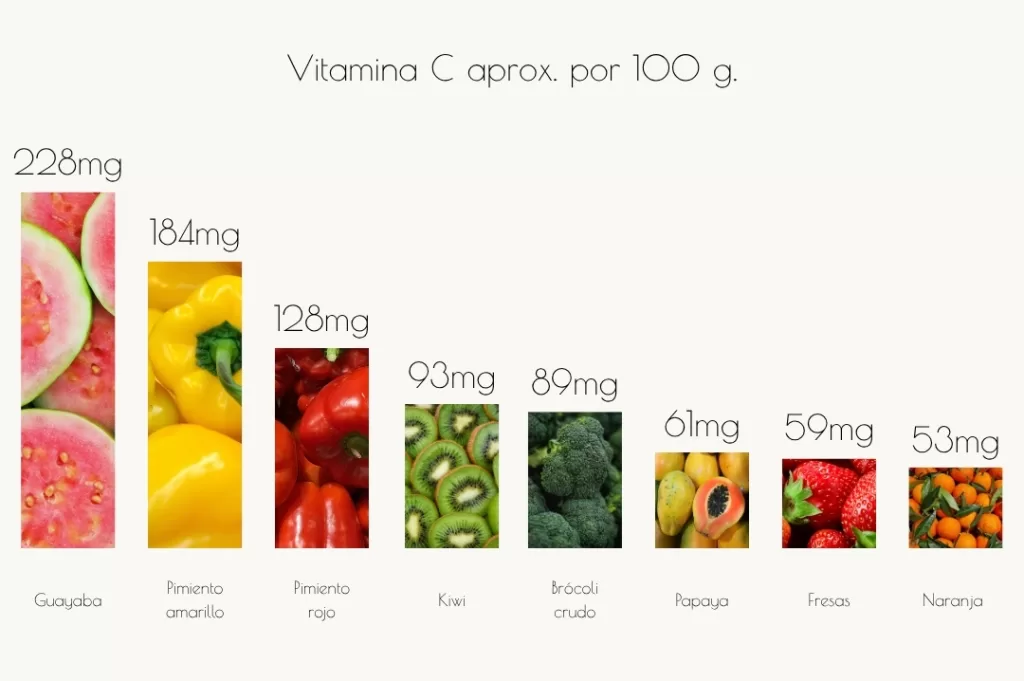
Vitamin C takes part in collagen synthesis, acts as an antioxidant and, as we saw, helps absorb iron from plant sources. It is abundant in fresh fruits and vegetables: guava, sweet pepper, kiwi, orange, lime, mandarin, pineapple, papaya and strawberries, among others.
How to preserve it
It is a vitamin that is sensitive to heat, cooking water and prolonged storage. Here are a few ideas to get more out of it:
- Eat fresh fruits and vegetables and, whenever you can, eat them raw.
- If you cook vegetables, do it for a short time and with little water, steamed or sautéed.
- Cut fruit right before eating it and avoid leaving it exposed for long.
Omega-3: not all sources are equivalent
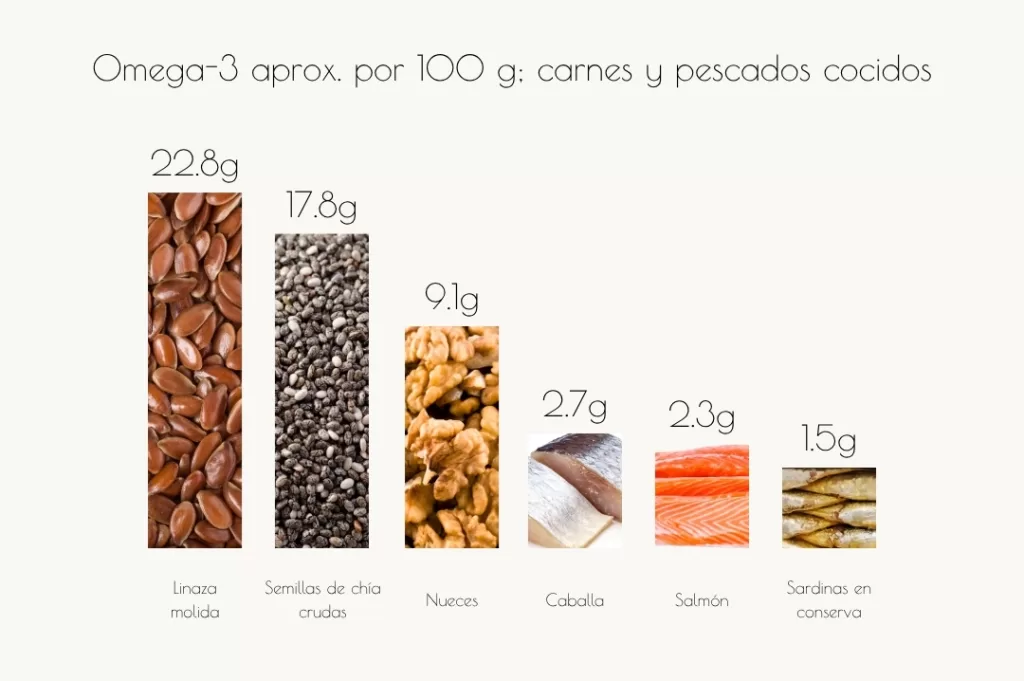
Omega-3 fatty acids are part of cell membranes and take part in various body functions. It helps to distinguish two groups:
- EPA and DHA: found in fatty fish such as sardines, salmon, tuna and mackerel.
- ALA: found in chia, flaxseed and walnuts.
The body can convert some ALA into EPA and DHA, but only to a limited extent. That is why plant and marine sources are not interchangeable in equivalent amounts. Both are valuable in a varied diet, but they don’t play exactly the same role. Health guidelines usually recommend including fish regularly, and canned sardines are an affordable, budget-friendly option.
A practical tip: flaxseed is better used ground, since whole seeds can pass through the intestine without being fully digested.
Magnesium and fiber: the quiet ones on the plate
Magnesium
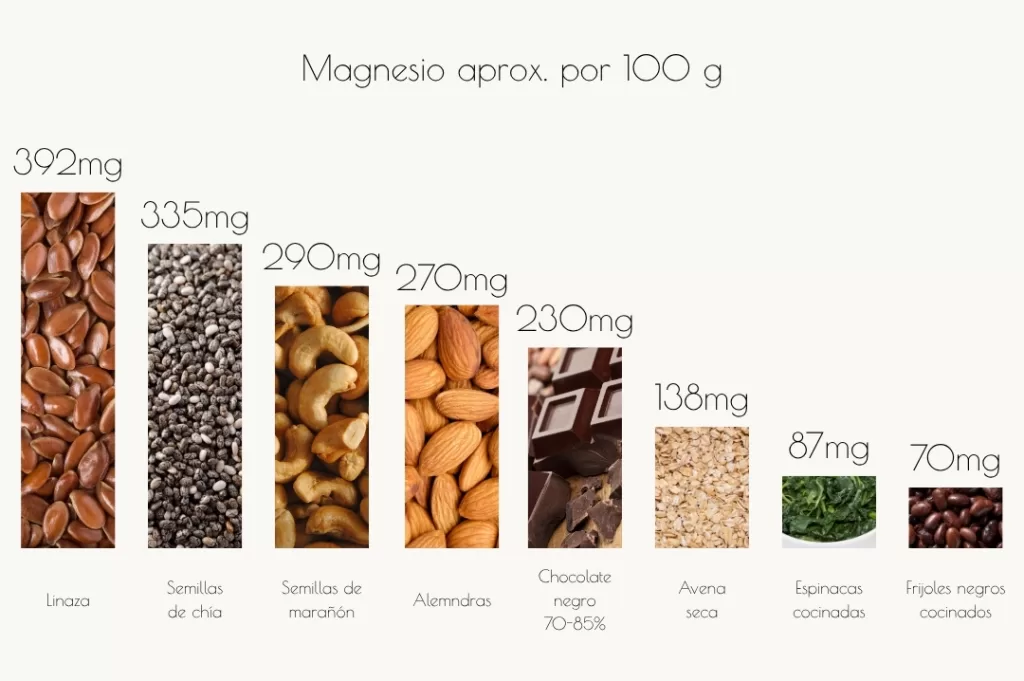
This mineral is involved in muscle and nerve function and in energy metabolism. It is found in seeds (such as pepitoria, or pumpkin seeds), nuts, legumes, whole grains and leafy green vegetables. Seeds and nuts can be very rich in magnesium, but a typical serving is a small handful, far less than 100 grams. That’s why it’s better to focus on what you actually eat rather than on the per-100-gram table.
Fiber
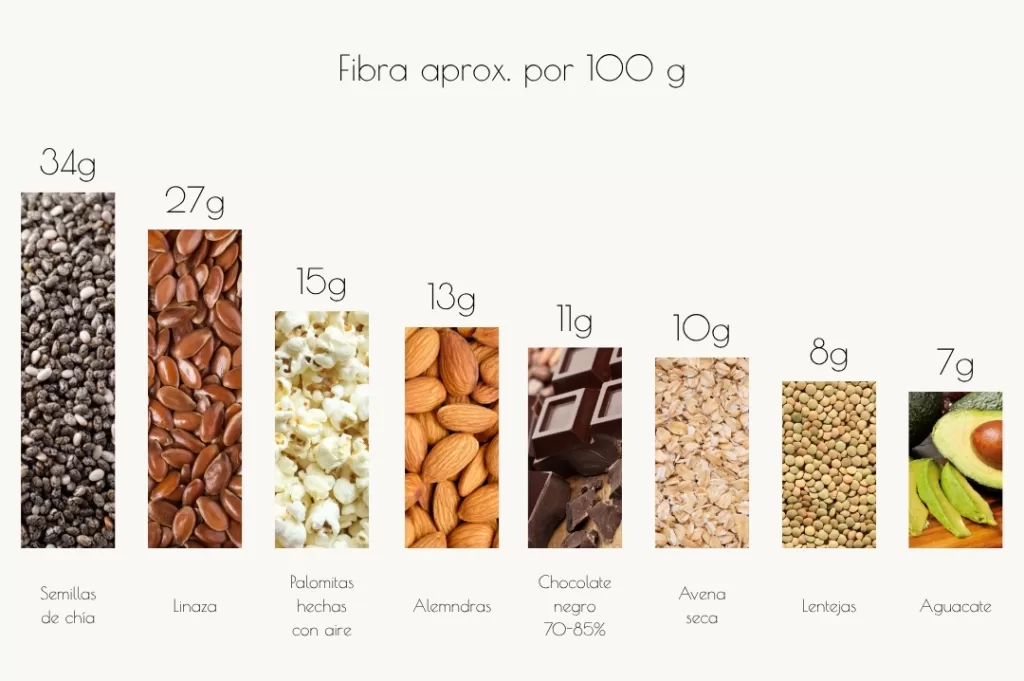
Fiber supports digestive health and regularity, and it is also associated with a more filling diet. The main sources are legumes, oats, whole grains, fruit with its skin when edible, vegetables and seeds.
Watch out for eye-catching numbers: some values circulating on social media, such as those for certain snacks, may be overestimated or may refer to very specific products. If you increase your fiber intake, do it gradually and drink enough water to avoid digestive discomfort.
How to combine these foods day to day
The key is to build complete meals with accessible ingredients. Here are some ideas inspired by the Costa Rican table, which you can adapt to your tastes and needs.
Breakfasts
- Oatmeal with chia seeds or ground flaxseed and fresh fruit (papaya, pineapple or strawberries): fiber, magnesium, plant-based omega-3 and vitamin C.
- Gallo pinto with egg and a side of sweet pepper or tomato: protein, plant-based iron and vitamin C.
Lunches
- Casado with beans, a fresh salad with lime, brown rice and chicken or fish: a varied, balanced plate.
- Lentil soup or stew with vegetables and a glass of orange juice or a citrus fruit for dessert.
Dinners
- Sardines or tuna on whole-grain toast with a cucumber, tomato and avocado salad.
- Stir-fried tofu or egg with vegetables and sweet pepper, served with corn tortillas.
Snacks
- A handful of walnuts or pepitoria with a piece of fruit.
- Chickpea hummus with carrot and sweet pepper sticks.
Supplements: not a shortcut
For most healthy people, a varied diet covers a good part of the needs for these nutrients. Supplements only make sense when a professional recommends them for a specific need. Taking them on your own isn’t always harmless, because some nutrients, such as iron, can be harmful in excess.
When to see a health professional
This guide is for information only and does not replace an assessment by a doctor or dietitian. It’s worth consulting one if:
- You feel persistent fatigue, weakness, paleness or other symptoms that your daily routine doesn’t explain.
- You are pregnant, breastfeeding, or planning a pregnancy.
- You follow a vegetarian or vegan diet and want to make sure you meet your needs.
- You have a chronic condition (kidney, digestive, diabetes or others), food allergies or intolerances.
- You are taking medications or supplements and have questions about possible interactions.
- You notice significant changes in weight, appetite or digestion with no clear cause.
A professional can assess your situation, order tests if appropriate and give you personalized guidance.
The key takeaways
- There is no such thing as a superfood: variety is what makes the difference.
- Think in real portions, not just per-100-gram values.
- Pair plant-based iron with foods rich in vitamin C.
- Include both marine and plant sources of omega-3, knowing they are not equivalent.
- Prioritize legumes, whole grains, fruits, vegetables, seeds and nuts in your routine.
Eating better doesn’t require strict diets or endless lists. Start by adding one new food a week, notice how you feel and build habits you can keep up.
This content is for informational purposes only and does not replace the advice, diagnosis or treatment of a healthcare professional. Always consult your doctor.