0
No products in the cart.

Valentino Garavani Dies at 93: The Last Emperor of Elegance

  • Comments: 0
  • Posted by: Andrés David Vargas Quesada

Valentino Garavani died at 93 at his home in Rome, according to a statement released by his foundation. With his passing, fashion loses one of the last great 20th-century couturiers—an artist who turned the evening gown into an emotional stage where power, vulnerability, desire, and fame could coexist.

Importantly, his death feels almost cinematic. Valentino did not simply dress women; he built moments. That is why his legacy remains tied to images that still hold cultural weight: a silk train on marble steps, a quiet smile before the flash, and a red so distinctive it became memory.

valentino-garavani-muere-legado

The last emperor of elegance

Valentino Clemente Ludovico Garavani was born in Voghera in 1932 and died in Rome on January 19, 2026. For decades, he was known simply as “Valentino,” a global authority on taste and a moral reference point for a very specific idea of luxury.

Yet his myth was never only branding. He earned it through craft: precise cuts, disciplined proportions, and an intimate understanding of how women want to feel when they enter a room.

From Rome to the world: the rise of Valentino red

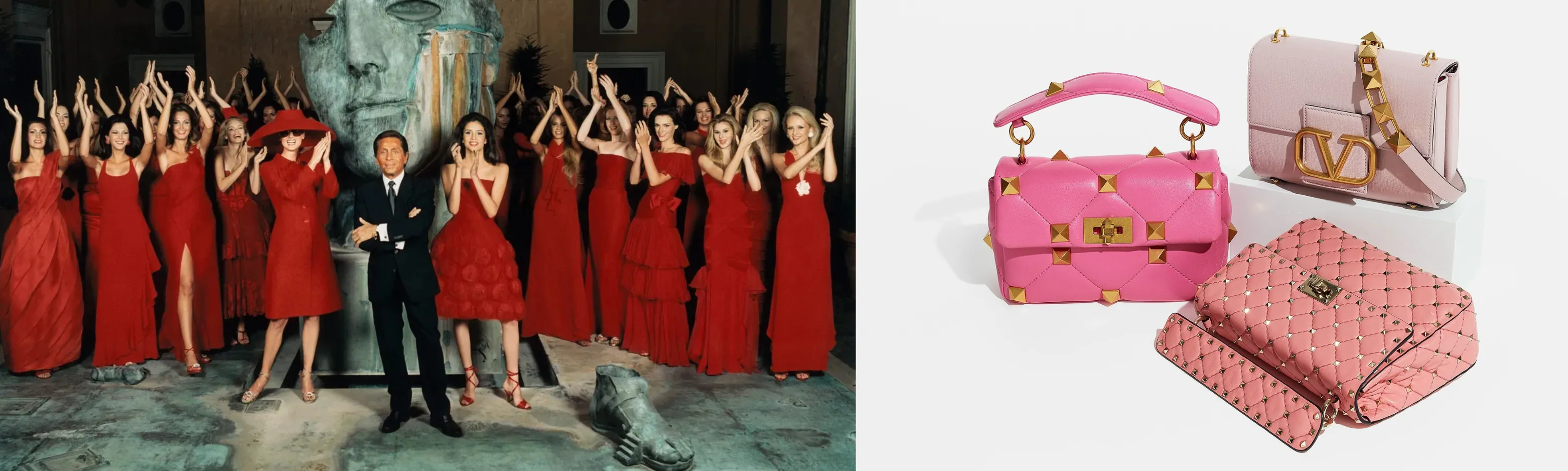
Valentino founded his house in Rome in 1960 and quickly gained international recognition through couture presentations that positioned Italy as a center of elegance. Over time, Valentino red became a visual code—less a shade than a statement of presence.

Meanwhile, the brand’s later expansion helped transform Valentino into an architect of global luxury desire, with a signature that remained instantly readable.

The muses who made Valentino Garavani a myth

The relationship between Valentino Garavani and his clients was often mutual. Jackie Kennedy turned to him during defining years, including her wedding to Aristotle Onassis—proof that couture can operate as ritual and narrative.

Likewise, Elizabeth Taylor amplified his legend by treating the atelier as a place where stardom meets craftsmanship. Years later, Julia Roberts revived Valentino’s archive power at the 2001 Oscars, showing that couture can outlive trend cycles and still feel electric.

Aristocracy, first ladies, and pop culture

Across decades, Valentino dressed both literal and symbolic royalty—aristocrats, first ladies, and Hollywood icons—because his designs photographed like history.

In more recent years, his presence continued through a new generation of stars who chose Valentino for high-visibility cultural moments. In short, his work endured because it aimed for memorability, not merely relevance

A recognizable design architecture

Valentino built a design language that could be recognized at a distance: saturated reds, pure whites, architectural blacks, bows, ruffles, and sculptural draping. Even when he minimized color, he proved that emotion can live in cut and proportion alone.

As a result, his gowns were rarely everyday objects. Instead, they were built for “forever moments”—the kind people recall with the clarity of personal milestones.

Valentino and Giancarlo Giammetti: love, business, myth

Valentino’s story is inseparable from Giancarlo Giammetti, his partner and business counterpart, with whom he built both a maison and a lifestyle mythology. The house’s later sale in the late 1990s confirmed the financial value of that universe.

Even so, Valentino remained the brand’s golden shadow—an enduring standard that continued to shape how the maison is perceived.

Retirement, documentary, and a public goodbye

Valentino announced his retirement in 2007 and staged his final couture show in 2008. That ending was captured in Valentino: The Last Emperor, which documents his demanding tenderness and emotional attachment to craft.

After his death, reports detailed a lying in state in Piazza Mignanelli and a funeral service at Santa Maria degli Angeli e dei Martiri in Rome—turning mourning into a public ritual.

Valentino Garavani leaves behind not only dresses, but an archive of emotions made fabric. Ultimately, his genius was understanding that luxury is not only material. It is also feeling, posture, and narrative.

The last emperor may be gone, but his visual language—red, white, and black—still holds the power to make the world look, and remember.

Author: Andrés David Vargas Quesada