0
No products in the cart.

Nike at a crossroads: slow growth, investor pressure and a tired sneaker culture

  • Comments: 0
  • Posted by: Andrés David Vargas Quesada

When the swoosh stops sprinting

Nike is living through one of the most paradoxical chapters in its recent history: it is growing again, but barely. That thin line between recovery and stagnation is exactly where Wall Street’s expectations live today—and where millions of sneakerheads feel that the swoosh’s energy no longer crackles the way it used to.

In that sense, Nike at a crossroads is not just a financial headline; it is an emotional climate. The company is posting roughly 1% year-on-year revenue growth, shoring up profits through disciplined cost control, yet still struggling to prove it is ready for its next big era.

nike-en-la-encrucijada-2026

Nike at a crossroads: recovery or stall?

In its second fiscal quarter of 2026, Nike reported about $12.4 billion in revenue, essentially flat compared with the same period a year earlier. The figure nudged past analysts’ expectations and showed a small improvement in gross margin, but it was far from a breakout.

Beneath the headline number sits a telling split. Wholesale revenue grew at a mid-single-digit pace, suggesting that returning to long-standing retail partners remains an effective way to regain visibility. At the same time, Nike’s direct-to-consumer business—once the centerpiece of its strategy—declined by close to 9%.

The brand is breathing a little easier thanks to cost discipline, yet the momentum is not coming from a rush of fresh demand. It is coming from a spreadsheet that has been put on a strict diet. That is the uncomfortable truth: Nike has proven it can protect its P&L; it has yet to prove it can reignite the world’s imagination.

The cost of a miscalibrated bet

In the early and mid-2020s, Nike made a series of strategic moves that now feel heavy. It doubled down on direct-to-consumer channels, pulled back from key wholesalers, and fell in love with its own classics.

In practice, that meant two parallel shifts:

  • A weakened wholesale ecosystem, where returning shoppers found shelves now dominated by competitors.
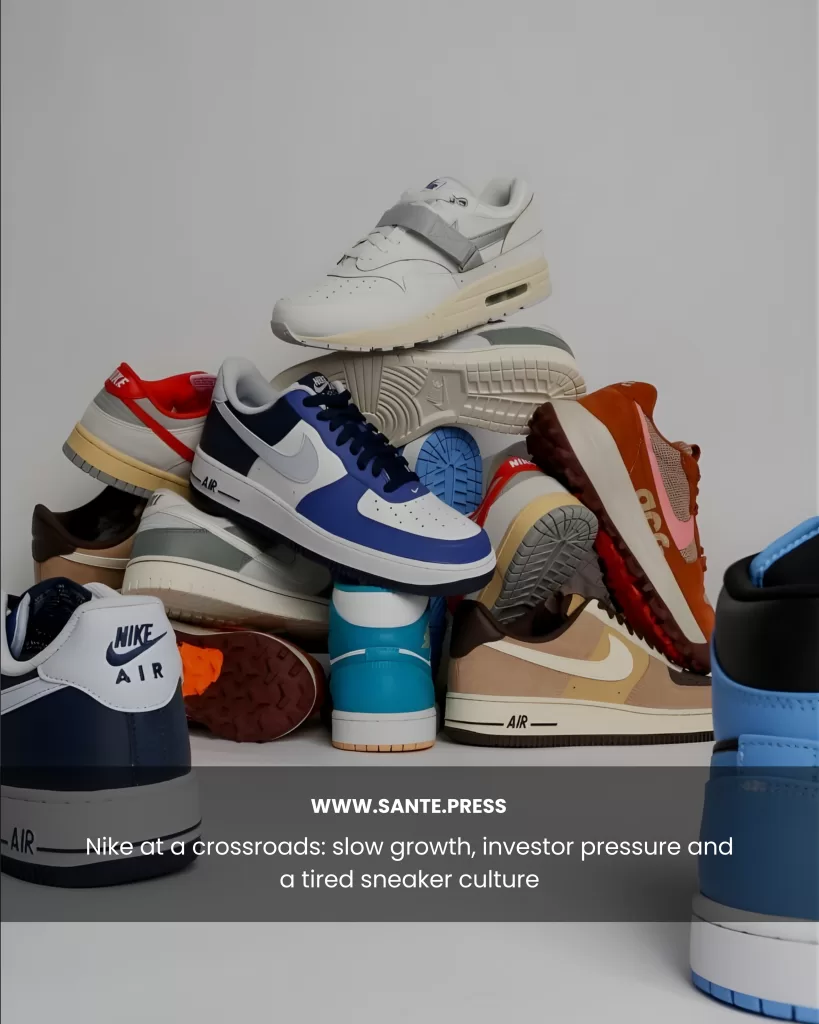
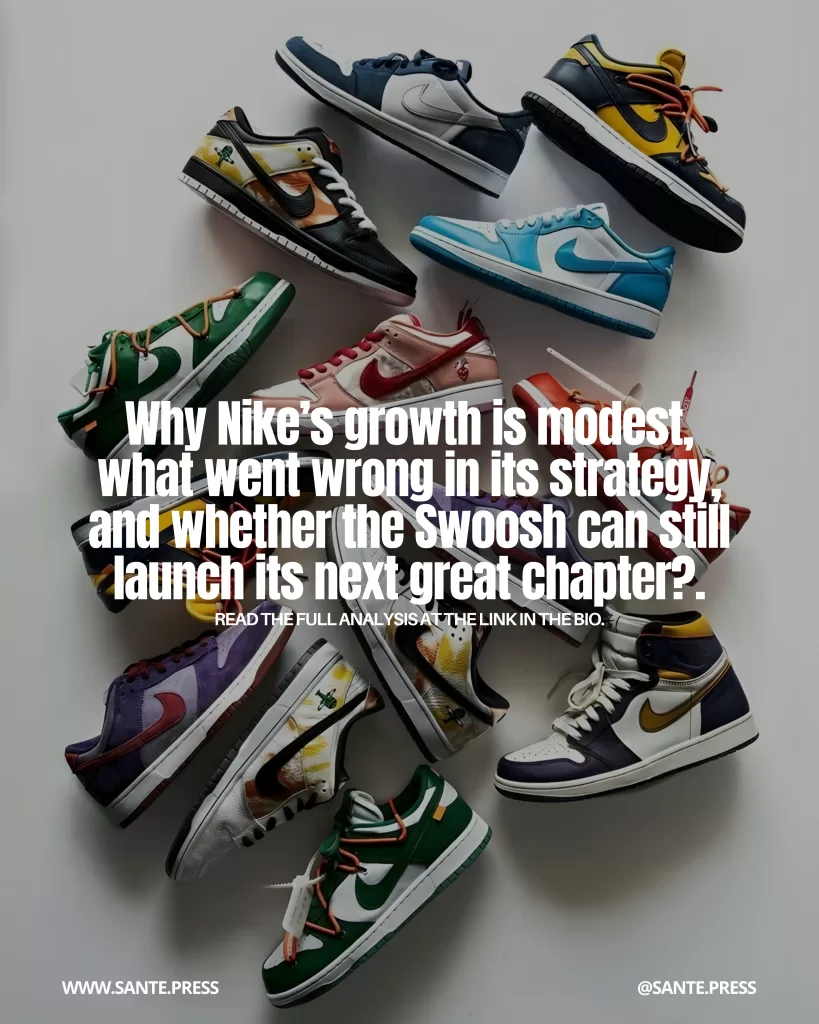
  • A product lineup saturated with new colorways of Jordan 1s, Dunks and Air Force 1s—highly profitable, but increasingly predictable.

At the same time, performance-driven running brands like On and Hoka captured momentum with fresh cushioning platforms and distinctive stories, especially among serious runners and style-conscious urban athletes.

The company that once turned innovation into a kind of religion began to look more like a house that was endlessly remixing its own myth.

Shared disappointment: investors and sneakerheads

For investors, Nike’s recent years can be summed up in one word: frustration. After a long stretch of near-automatic growth, markets were confronted with guidance pointing to mid-single-digit sales declines for fiscal 2025 and warnings from analysts that any turnaround would take time.

The reaction was swift: cuts to price targets, more cautious ratings and a clear message to management—structural fixes are not enough without a compelling growth story.

On the cultural side, sneakerheads feel a different kind of letdown. The silhouettes that once defined eras now resemble a never-ending loop of minor variations. The thrill of “Did you see Nike’s new drop?” has softened into “It’s another colorway of the same shoe.”

Meanwhile, many runners are discovering the excitement of slipping into something new, with cushioning that feels unlike anything they have worn before and a brand narrative they have not heard a hundred times. The betrayal is quiet but visible in the closet: spaces once reserved exclusively for the swoosh now host other logos too.

Numbers that feed the unease

The Nike at a crossroads moment is shaped by several pressure points:

  • Minimal revenue growth: roughly 1% growth feels less like a rebound and more like a long pause.
  • Direct-to-consumer in reverse: the dream of a pure DTC empire has been tempered; Nike is rebuilding bridges with the wholesale partners it once stepped away from.
  • Margins squeezed by costs and tariffs: higher product costs and US tariffs on imported footwear and apparel are crimping profitability and forcing uncomfortable pricing decisions.
  • A nervous consumer: confidence indicators in key markets like the US have hovered near recent lows, reflecting concern about employment, politics and the cost of living.

All of this unfolds in a landscape where almost all footwear and a large majority of apparel sold in the US are imported, leaving the sector highly exposed to trade tensions and tariff shifts.

Sparks of a comeback: back to sport, back to risk

Even so, beneath the grey tones there are hints of a possible comeback. In performance running, Nike has posted multiple quarters of double-digit growth, powered by technical platforms designed to claw back share from upstart rivals.

The company has also moved to deliberately cut back volumes in some of its most overexposed franchises, aiming to restore scarcity and desire. Fewer pairs, more intention. At the same time, it is rebuilding relationships with key retailers and redirecting investment toward innovation and design, after years of leaning perhaps too heavily on data analytics and too lightly on creative instinct.

Initiatives like Nike Mind—a platform meant to combine physical training, mental preparation and product into a unified ecosystem—signal a more holistic reading of the modern athlete. It is no longer just about faster times; it is about sustaining a sporting identity in a screen-saturated world.

What Nike must prove next

The line many commentators repeat—“Investors to Nike: Just Do It Again”—captures the mood. The demand is not for nostalgia; it is for a renewed appetite for risk.

Over the coming quarters, Nike has at least four things to prove:

  • That it can grow faster than 1% without losing financial discipline.
  • That it can balance archive and future, using classics as foundations rather than crutches.
  • That it understands the new consumer, who is willing to pay for logos only when they come wrapped in credible stories and durable products.
  • That it can reconcile Wall Street and culture, turning this transition period into the opening of a new growth curve rather than a plateau.

The story of Nike at a crossroads is not one of freefall, but of a giant forced to remember why it became a myth in the first place. The brand is still growing, yet too slowly for a market that moves fast. It is still profitable, yet not inspiring enough for fans who once felt they were witnessing history with every new silhouette.

Investors and sneakerheads, for once, want the same thing: not a perfectly optimized company, but a braver one. If Nike can convert its modest improvement into a true second growth curve—more athletic, more inventive, less complacent—the narrative will change. It will no longer be about a legend on the defensive, but about an icon that understood that, to run again, it first had to risk everything once more.

Author: Andrés David Vargas Quesada