1
Plan Básico 1 ×
$1 / month
Subtotal : $1

Kantamanto Market and circular fashion: resilience from Ghana

  • Comments: 0
  • Posted by: Andrés David Vargas Quesada

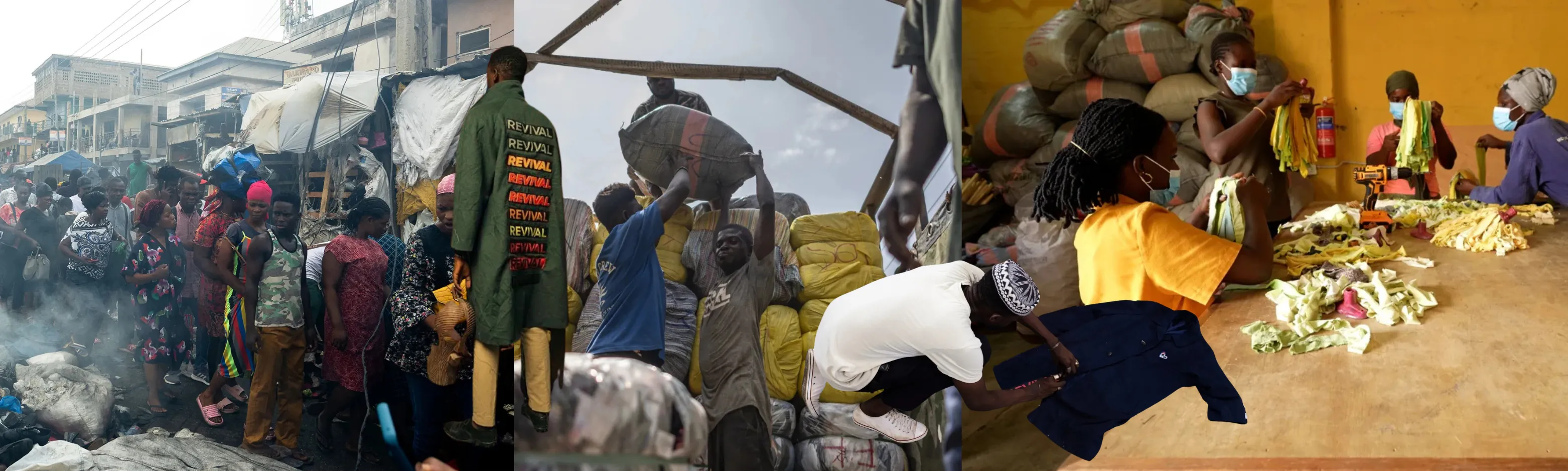
Kantamanto Market and circular fashion reveal one of the most honest forms of sustainability operating today. Located in Accra, Ghana, Kantamanto is not a green experiment or a branded initiative. It is a human response to the overwhelming volume of discarded clothing exported from the Global North. More than 30,000 traders work daily to turn rejection into survival, creativity, and dignity.

Spanning 18 acres, the market processes up to 25 million second-hand garments each month, mainly from the United States, Europe, and Australia. What is considered excess elsewhere becomes raw material here. As a result, Kantamanto functions as a forced circular economy, where sustainability is not optional but necessary.

kantamanto-market-moda-circular

An ecosystem that sustains communities

Kantamanto operates through a highly organized internal system. Divided into 13 sections, each with community leadership, the market supports a wide range of roles. Retailers track global trends, tailors repair damaged clothing, and upcyclers reimagine what cannot be resold.

Within this structure, Kantamanto Market and circular fashion merge into an economic engine that supports thousands of Ghanaian families. Roughly 60% of imported garments are reused or transformed, while the remaining 40% become environmental waste, exposing the limits of a global system that exports responsibility along with clothing.

Creativity born from rejection

Among the crowded stalls, new voices in fashion emerge. Upcyclers like Ruth Odoom shifted away from resale as garment quality declined. Today, she creates new designs from old shirts and jeans, asking how long survival is possible without transformation.

Designers such as Samuel Gyasi and David Donko, founder of Lifestyle Denim, have taken Kantamanto aesthetics to wider audiences. Supported by initiatives like Kantamanto Social Club and The Or Foundation, they challenge Eurocentric ideas of sustainability and innovation.

Fire, loss, and collective rebuilding

On January 1st, 2025, a massive fire destroyed nearly 60% of Kantamanto’s stalls. Over 2,500 traders lost goods, infrastructure, and income overnight. For many, the fire erased years of work in a country already facing economic strain.

The disaster revealed the vulnerability behind Kantamanto Market and circular fashion. Despite its global importance, the market receives little structural support. Rebuilding has largely been driven by the community itself.

Waste colonialism and invisible costs

Kantamanto embodies what activists describe as waste colonialism. Wealthy countries export low-quality garments while shifting environmental and health costs to the Global South. Unsellable clothing clogs landfills, pollutes coastlines, and sometimes ignites spontaneously.

Yet, the market persists. Not through rhetoric, but through daily practice. Every repaired garment is a quiet refusal to accept a system built on disposability.

Lessons for fashion’s future

Kantamanto proves that circularity is not a trend—it is survival. Repair, reuse, and reinvention are not symbolic gestures, but real economic infrastructures. The market forces the global fashion industry to confront an uncomfortable truth: sustainability without justice is incomplete.

For international audiences, Kantamanto Market and circular fashion act as both warning and guide. Ghana is not merely absorbing waste; it is shaping ideas that could redefine fashion’s future—if the world is willing to listen.

Kantamanto Market is more than a marketplace. It is a mirror of fashion’s excess and a blueprint for resilience. As long as the industry produces more than it can sustain, places like Kantamanto will bear the burden. Yet, within its crowded paths lies one of the most honest visions of what a responsible fashion system could become.

Author: Andrés David Vargas Quesada