0
No products in the cart.

Fashion colors 2026: when the palette grows up

  • Comments: 0
  • Posted by: Andrés David Vargas Quesada

For years, color worked as a shortcut to attention. Standing out, glowing, or contrasting was enough to exist in the visual flow. However, something shifts when we look ahead. In 2026, getting dressed stops being impulsive and becomes a more conscious decision. Fashion colors 2026 reflect this quiet but profound turn. They no longer seek to dominate the scene, but to accompany the wearer. Instead of provoking, they suggest. Instead of accelerating, they calm. As a result, the wardrobe becomes a narrative space where every shade speaks to the emotional state of an era asking for less noise and more meaning.

Colores de moda 2026 cuando la paleta madura

The emotional turn of color in 2026

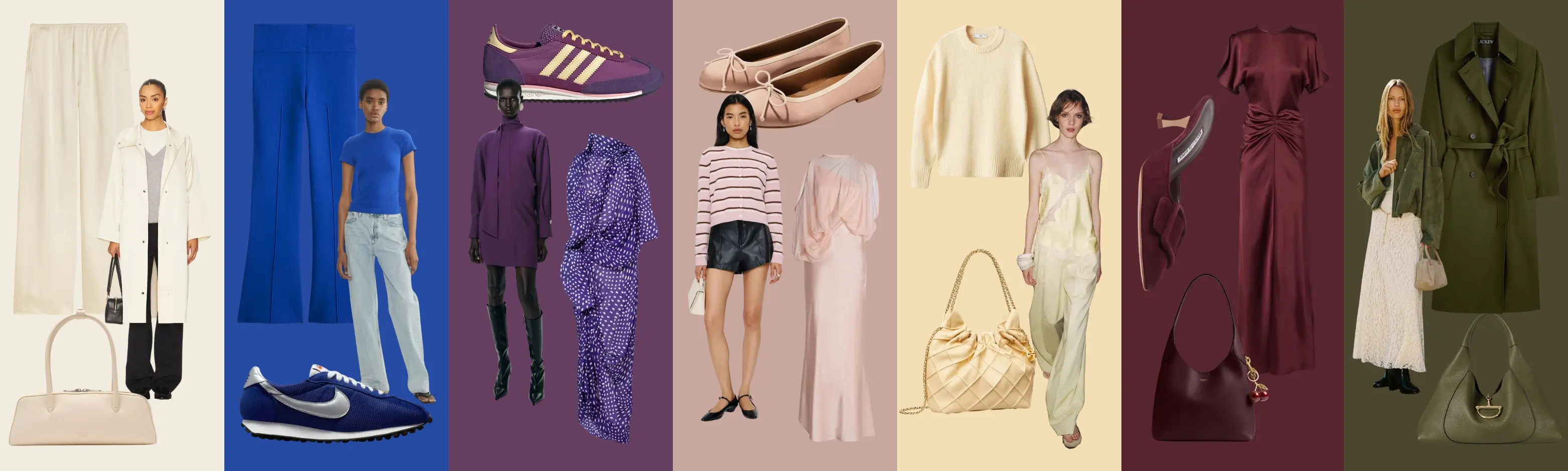
Recent runways confirm a clear transition toward more serious, tactile, and reflective palettes. Color stops acting as an immediate hook and begins operating as emotional language. Within this cultural context, fashion colors 2026 respond to a collective fatigue with the visual saturation of the last decade. Milky neutrals, intense blues, and restrained yellows build complete stories meant to last beyond a single season. Fashion no longer competes for instant impact, but for the ability to create a more lasting, almost intimate, connection with those who wear it.

Renewed neutrals: when calm becomes aspirational

Camel, long omnipresent as a symbol of quiet luxury, starts to lose its central role without disappearing entirely. In its place emerges cashew milk, a warm, luminous cream that recalls matte porcelain or light filtered through linen. Designers such as Khaite, Tove, and Brandon Maxwell introduce it through fluid fabrics and refined silhouettes. This neutral does not impose authority; it implies it. Emotionally, it conveys a clean future, tactile softness, and a sense of space. It represents a new idea of elegance: less uniform, more sensorial, more open to nuance.

Blues with presence: from timidity to affirmation

Baby blue, long associated with light nostalgia and softness, begins to fade in favor of more assertive versions. The so-called Capri blue, close to cobalt, appears in structured coats and sharply defined dresses. Houses like Chloé, Saint Laurent, and Versace  present it as a daily alternative to black. This blue does not aim for gentleness; it seeks presence. It acts as a visual affirmation for those who want color without returning to excess. It is intense, yet not aggressive. Confident, yet not rigid.

Purples, pinks, and the end of pleasing pastels

Ethereal lavender, once a symbol of light spirituality, loses ground to deep, almost ritualistic purple. Prada, Balenciaga, and Valentino push it into territories of authority, mystery, and adult transformation. A similar shift happens with pink. Barbie pink, exhausted by cultural overexposure, retreats to make room for powder pink, a cool, dusty veil of color. This shade does not demand immediate attention. It invites closeness. It translates vulnerability into elegance and replaces caricature with a more conscious, layered femininity.

Yellows and greens: optimism with restraint

Burnt orange, long tied to a perpetual autumn aesthetic, begins to feel heavy and predictable. In contrast, soft lemon yellow gains ground as a symbol of refined optimism. It is neither childish nor fluorescent; it recalls clear midday light. At the same time, neon green exits almost without nostalgia. In its place, martini olive introduces a muted, earthy sensuality. Supported by Gucci and emerging brands, this green adapts effortlessly from day to night, reinforcing an aesthetic of fresh maturity and accessible sophistication.

Toward a more human palette

The thread connecting these changes is not industry whim, but a collective shift in sensitivity. Trend analyses agree that audiences are seeking tones that accompany complex lives, not colors that mask anxiety with fluorescence. In this sense, fashion colors 2026 express a cultural need for calm, depth, and emotional truth. Getting dressed stops being an external performance and becomes an act of internal coherence, where color is chosen for how it feels, not for how many eyes it attracts.

Fashion colors 2026 do not arrive to ban or impose rigid rules. They arrive to redefine priorities. After a decade dominated by instant impact, fashion proposes tones that endure and dialogue with lived experience. Cashew milk instead of absolute camel, martini olive instead of neon, dense purples in place of pleasing pastels. Color ceases to be noise and becomes narrative. And in that quiet, deeply human gesture, fashion recovers its ability to truly accompany.

Author: Andrés David Vargas Quesada